Modern eCommerce customers expect fast page loads, smooth navigation, and a seamless shopping experience.
PrestaShop Headless combines PrestaShop’s powerful backend with a modern frontend like Next.js, delivering better performance, scalability, flexibility, and improved SEO.
That’s why we chose Next.js as the frontend framework for our PrestaShop storefront.
In this article, we’ll explain the reasons behind this decision, the benefits it brings, and how Next.js helps us build a faster and more maintainable commerce experience.
Understanding the Challenge
Traditional PrestaShop themes render pages directly from the server.
This approach works well for many stores, but it can become limiting when building highly interactive and performance-focused storefronts.
We wanted a frontend architecture that could:
- Improve page speed.
- Enhance SEO performance.
- Support modern UI development.
- Scale with future business requirements.
- Integrate easily with APIs and third-party services.
Next.js solved these challenges while allowing PrestaShop to remain the commerce engine behind the scenes.
Introduction to Next.js
Next.js is a React framework developed by Vercel. It provides powerful features such as server-side rendering, static generation, image optimization, caching, and modern routing.
These features make it an excellent choice for building high-performance eCommerce storefronts.
Why We Selected Next.js for PrestaShop
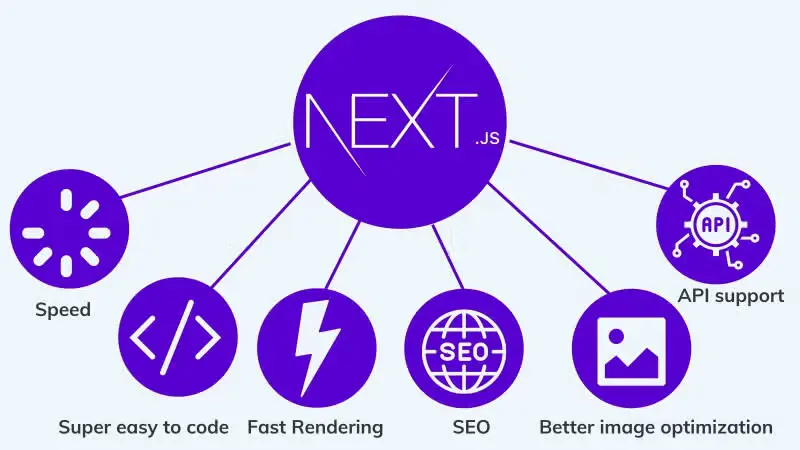
Faster Page Loading
Performance directly impacts user experience and conversion rates.
Next.js improves loading speed through server rendering and intelligent caching strategies.
Pages can be pre-rendered before users request them.
This reduces waiting time and improves Core Web Vitals.
export default async function ProductPage() {
  const product = await getProduct();

  return (
    <div>
      <h1>{product.name}</h1>
    </div>
  );
}
This page fetches product data on the server before sending HTML to the browser.
Better SEO Performance
Search engines can easily crawl pre-rendered pages.
This improves the visibility of product pages and category pages.
Unlike purely client-side applications, Next.js delivers meaningful content immediately.
Example Metadata
export const metadata = {
  title: "Running Shoes",
  description: "Premium running shoes for athletes",
};
This helps search engines understand page content more effectively.
Modern Developer Experience
Building storefront features should be fast and maintainable.
Next.js provides:
Hot reloading
File-based routing
Server Components
TypeScript support
API routes
These features reduce development complexity and improve productivity.
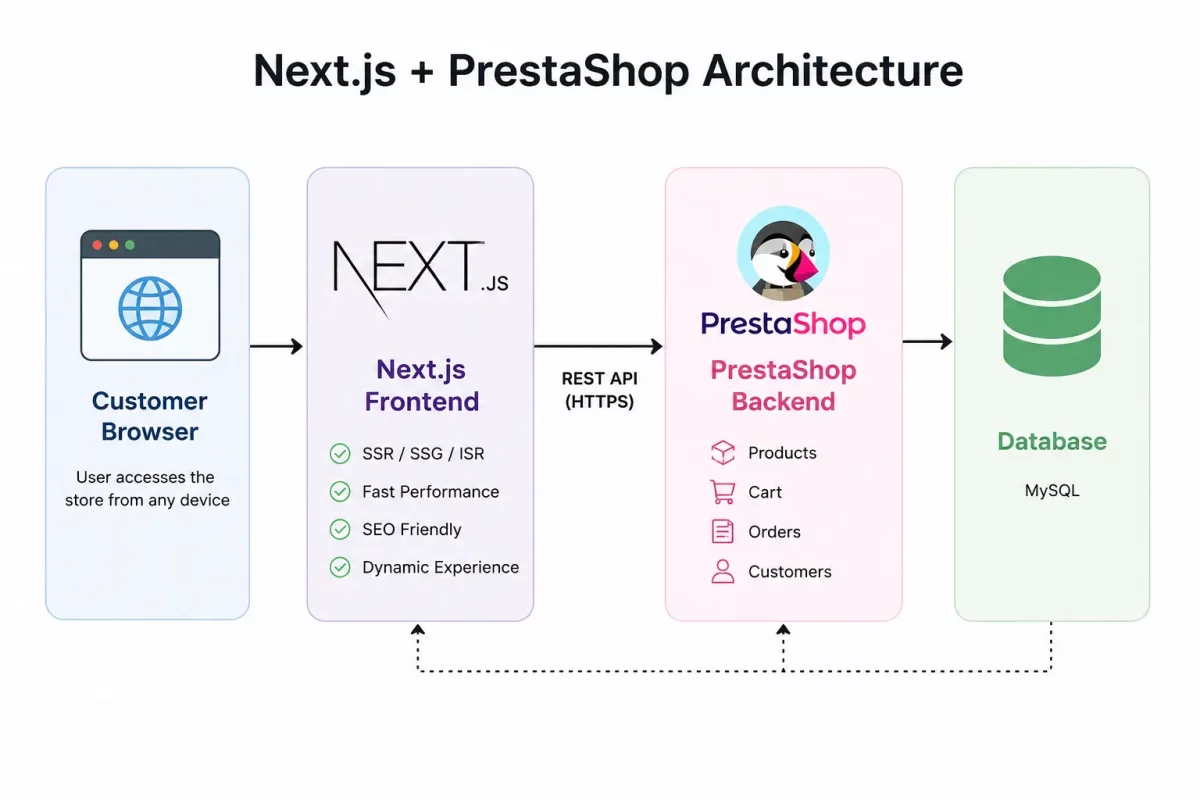
Flexible Headless Architecture
We wanted to separate presentation from commerce logic.
With a headless approach:
- PrestaShop manages products and orders.
- Next.js handles the customer-facing experience.
This separation gives teams more flexibility when making frontend changes.
Improved Caching Strategies
One of the strongest reasons for choosing Next.js is its modern caching capabilities.
Next.js supports:
- Static Rendering
- Dynamic Rendering
- Incremental Revalidation
- Data Caching
- Route Caching
This allows us to optimize different pages based on their business requirements.
Example
const products = await fetch(API_URL, {
  next: {
    revalidate: 300,
  },
}).then((res) => res.json());
The product data will be refreshed every 5 minutes.
Better Image Optimization
Product images significantly affect page performance.
Next.js automatically optimizes images by:
Reducing bandwidth usage
Serving modern formats
Lazy loading images
Resizing images dynamically
Example
import Image from "next/image";

<Image
  src="/product.jpg"
  alt="Product"
  width={800}
  height={800}
/>
This flexibility allows teams to build feature-rich storefronts faster.
Scalability for Future Growth
As stores grow, requirements become more complex.
New integrations, personalization features, search engines, and marketing tools often need to be added.
Next.js provides a flexible foundation that supports these future enhancements without requiring major architectural changes.
This makes it a long-term investment rather than a short-term solution.
Deployment and Hosting Benefits
Next.js works well across multiple deployment platforms.
Popular options include:
- Vercel
- AWS
- Docker environments
- Kubernetes clusters
This gives organizations freedom when choosing infrastructure.
Our Frontend Workflow
The workflow is straightforward.
- PrestaShop manages commerce operations.
- APIs expose store data.
- Next.js consumes the APIs.
- Users interact with the storefront.
- Orders are processed through PrestaShop.
This separation keeps responsibilities clear and maintainable.
Conclusion
We chose Next.js for our PrestaShop headless storefront to deliver faster pages, stronger SEO, and a smoother shopping experience.
PrestaShop continues to manage products, orders, and core commerce operations through a reliable and scalable backend.
Combining Next.js with PrestaShop gives us the flexibility to build modern storefronts while keeping a stable commerce backend.
This architecture scales with our business, making it easier to add features, improve performance, and enhance customer experiences without rebuilding the backend.

Be the first to comment.