Businesses use ERP systems to manage core operations such as accounting, HR Management, inventory, sales, purchasing, and customer data from one platform.
PHP-based ERP systems offer a flexible option for businesses that need customizable and cost-effective solutions.
These ERP platforms can support different business requirements, from accounting and inventory management to manufacturing and project management.
Their PHP-based architecture also allows businesses to customize features and integrate the system with other applications.
In this blog, we compare the top 7 PHP-based ERP systems based on their key features, pros, cons, and use cases.
The comparison helps businesses understand which ERP solution best fits their operational and technical requirements.
Comparison of Top 7 PHP-Based ERP Systems
The following table compares the top 7 PHP-based ERP systems based on their target users, key strengths, technology, and open-source availability.
It helps businesses quickly compare each ERP solution.
| ERP System | Best For | Key Strength | Technology | Open Source |
|---|---|---|---|---|
| Dolibarr ERP & CRM | Small and medium businesses | Modular ERP and CRM | PHP | Yes |
| Aureus ERP | SMEs and growing businesses | Modern modular ERP | Laravel, PHP | Yes |
| webERP | Small businesses | Accounting and inventory | PHP | Yes |
| FrontAccounting | Small businesses | Financial management | PHP | Yes |
| Akaunting | Freelancers and small businesses | Accounting and invoicing | Laravel, PHP | Yes |
| LiteERP | Developers and small businesses | Lightweight ERP foundation | Laravel, PHP, React | Yes |
| NotrinosERP | Small and medium businesses | ERP, accounting, CRM, HR, and manufacturing | PHP, MySQL | Yes |
1. Dolibarr ERP System & CRM
Dolibarr is an open-source CRM and ERP platform written in PHP. It uses a modular structure, allowing businesses to activate only the functions they need.

Key Features:
- Customer, supplier, and contact management
- Product and service management
- Inventory and warehouse management
- Sales orders and quotations
- Purchase management
- Invoicing and payment management
- Accounting
- Project and time management
- Manufacturing and bill of materials
- Point of Sale
- REST API
- Multi-language and multi-currency support
- Import and export tools
Pros
- Open-source and highly customizable
- Modular architecture
- Supports ERP and CRM functions in one system
- Can be deployed on-premise or in the cloud
- Large selection of external modules
- Relatively simple to install and use
Cons
- Advanced business requirements may require additional modules or customization
- The large number of modules can make initial configuration time-consuming
- Some specialized enterprise functions may require third-party extensions
Why Use Dolibarr?
Use Dolibarr when you need a PHP-based ERP with ERP and CRM functions, modular features, and flexible deployment options.
It is particularly suitable for businesses that want to start with basic modules and add more as their requirements grow.
2. Aureus ERP: Next Gen Open Source ERP
Aureus ERP is an open-source ERP platform built with Laravel and FilamentPHP.
It is designed for SMEs and larger organizations and uses a modular plugin structure.

Main Features:
- Accounting management
- Inventory management
- Purchase orders
- Sales management
- Employee management
- Recruitment
- Project management
- CRM and contacts
- Business reporting
- Role-based access control
- Multi-language support
- API and third-party integrations
- Modular plugin architecture
- Real-time interface updates
Pros
- Built on a modern PHP framework
- Open-source and customizable
- Modular architecture
- API support for integrations
- Responsive interface
- Role-based access control
- Suitable for different business departments
Cons
- Newer than some established PHP ERP platforms
- Businesses may need developers for advanced customization
- The available ecosystem is smaller than older ERP platforms
Why Use Aureus ERP?
Use Aureus ERP when you need a modern Laravel-based ERP that can be customized at the code level.
Its modular architecture makes it suitable for businesses that want to select and extend ERP functions according to their workflows.
3. WebERP
webERP is a web-based open-source ERP and accounting system written in PHP.
It focuses on accounting, inventory, purchasing, sales, and business management.

Key Features:
- General ledger and accounting
- Accounts payable and receivable
- Inventory management
- Purchasing
- Sales management
- Customer and supplier management
- Manufacturing
- Multi-language support
- Web-based access
- Business reporting
- Customizable PHP codebase
Pros
- Free and open-source
- PHP-based and customizable
- Web-based access
- Covers core accounting and ERP functions
- Supports multiple languages
- Long development history
Cons
- Interface is less modern than newer ERP platforms
- Advanced requirements may need custom development
- May require technical knowledge for deeper customization
Why Use webERP?
Choose webERP if your business needs a PHP-based ERP focused on accounting, inventory, sales, and purchasing without the licensing costs of proprietary ERP software.
4. FrontAccounting
FrontAccounting is a free, open-source web-based accounting and ERP system designed mainly for small businesses.
It covers financial management along with purchasing, sales, inventory, and manufacturing.

Main Features:
- General ledger
- Accounts payable and receivable
- Sales orders and invoices
- Purchase orders
- Supplier management
- Inventory and stock management
- Manufacturing
- Fixed asset management
- Multi-company support
- Multi-currency support
- Multi-language support
- Financial reporting
- Budget management
Pros
- Free and open-source
- Strong accounting functionality
- Covers core ERP operations
- Supports multiple companies
- Supports multiple currencies and languages
- Suitable for small businesses
Cons
- Primarily focused on accounting and financial operations
- User interface can feel dated
- Advanced ERP workflows may require customization
Why Use FrontAccounting?
Use FrontAccounting when accounting is the main ERP requirement and you also need inventory, purchasing, sales, and manufacturing functions in the same system.
5. Akaunting
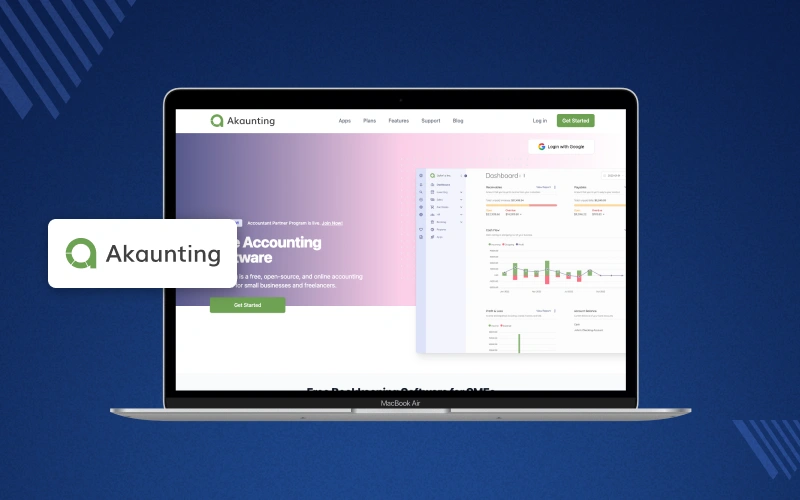
Akaunting is a PHP-based, open-source accounting platform built with Laravel.
It is designed mainly for small businesses and freelancers, with functions centered on financial management.
Main Features:
- Invoicing
- Expense tracking
- Bank account management
- Customer management
- Vendor management
- Online payments
- Multi-company accounting
- Multi-currency support
- Financial reporting
- Client portal
- Recurring transactions
- REST API
- Modular app structure
Pros
- Built with Laravel
- Open-source
- Easy-to-use interface
- Self-hosted option
- Modular architecture
- REST API support
- Suitable for small businesses
Cons
- More focused on accounting than full ERP operations
- Advanced ERP requirements may need additional apps
- Manufacturing and complex supply-chain functions are not its primary focus
Why Use Akaunting?
Choose Akaunting when you primarily need PHP-based financial management with invoicing, expenses, payments, and accounting, rather than a large enterprise ERP suite.
6. LiteERP
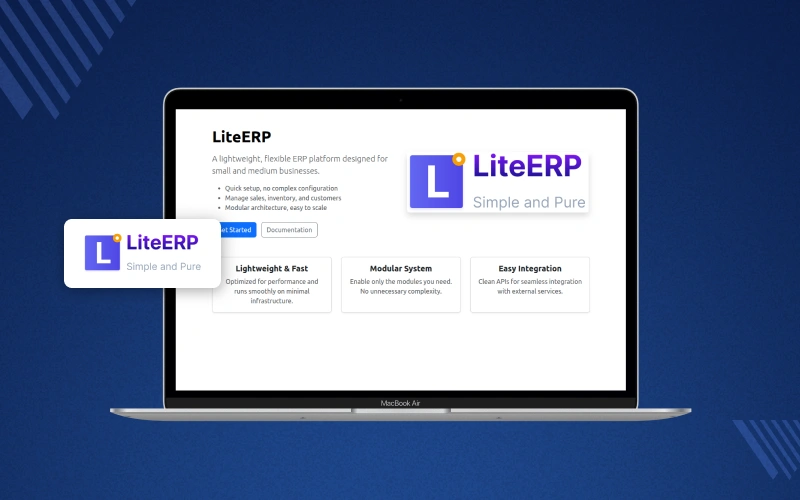
LiteERP is a PHP-based open-source ERP solution built with Laravel and React.
It is designed for small businesses that need core business management features in a lightweight system.
Key Features:
- Sales management
- Purchase management
- Inventory management
- Customer management
- Supplier management
- Product management
- Invoice management
- Accounting functions
- Dashboard and reporting
- User and role management
- Laravel-based architecture
Pros
- Open-source and customizable
- Uses the Laravel PHP framework
- Lightweight compared with large ERP platforms
- Suitable for small businesses
- Can be modified according to business requirements
Cons
- Smaller ecosystem than established ERP platforms
- Limited enterprise-level functionality
- Advanced customization may require PHP development skills
Why Use LiteERP?
Use LiteERP when you need a lightweight PHP-based ERP for core sales, purchasing, inventory, and business management without adopting a large ERP platform.
7. NotrinosERP
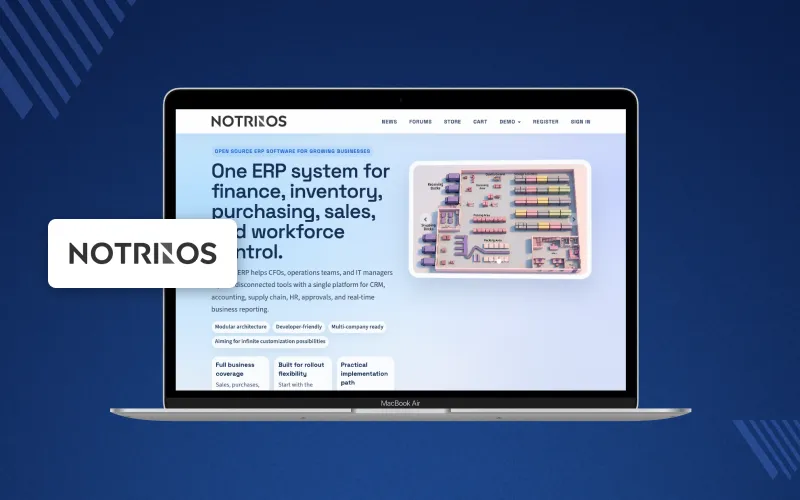
NotrinosERP is a PHP and MySQL-based open-source ERP designed for small and medium-sized businesses.
Its modules cover CRM, sales, purchasing, warehousing, manufacturing, payroll, HR, accounting, and approval workflows.
Main Features:
- Accounting and financial management
- CRM
- Sales and purchasing
- Inventory and warehousing
- Manufacturing
- Payroll and HR
- Multi-company support
- Multi-currency support
- Multi-language support
- Multi-level approval workflows
- User management
- Self-hosted deployment
Pros
- Built with PHP and MySQL
- Open-source under GPL-3.0-or-later
- Covers several core ERP functions
- Supports multiple companies and currencies
- Self-hosted
- Active releases are available, including version 1.0 released in June 2026.
Cons
- Smaller ecosystem than established ERP platforms such as Dolibarr
- Advanced customization may require PHP development skills
- Businesses may need technical resources for implementation and maintenance
Why Use NotrinosERP?
Use NotrinosERP when you need a PHP-based open-source ERP with accounting, inventory, sales, purchasing, manufacturing, CRM, and HR functions in one system.
It is particularly suitable for businesses looking for a self-hosted and customizable ERP.
Final Thoughts
PHP-based ERP systems help businesses manage accounting, inventory, sales, purchasing, projects, and other operations from a centralized platform.
The right ERP depends on business size, workflows, customization needs, and technical requirements.
Among these options, Aureus ERP is a suitable choice for businesses looking for a modern, modular, and customizable PHP-based ERP.
Built with Laravel and FilamentPHP, it supports core business functions while providing flexibility for further customization and integrations.

Be the first to comment.