
E-Commerce, Italy
Commercio Virtuoso is an Italian online marketplace designed to connect consumers with businesses that share a commitment to ethical and sustainable practices.

Project Snapshot
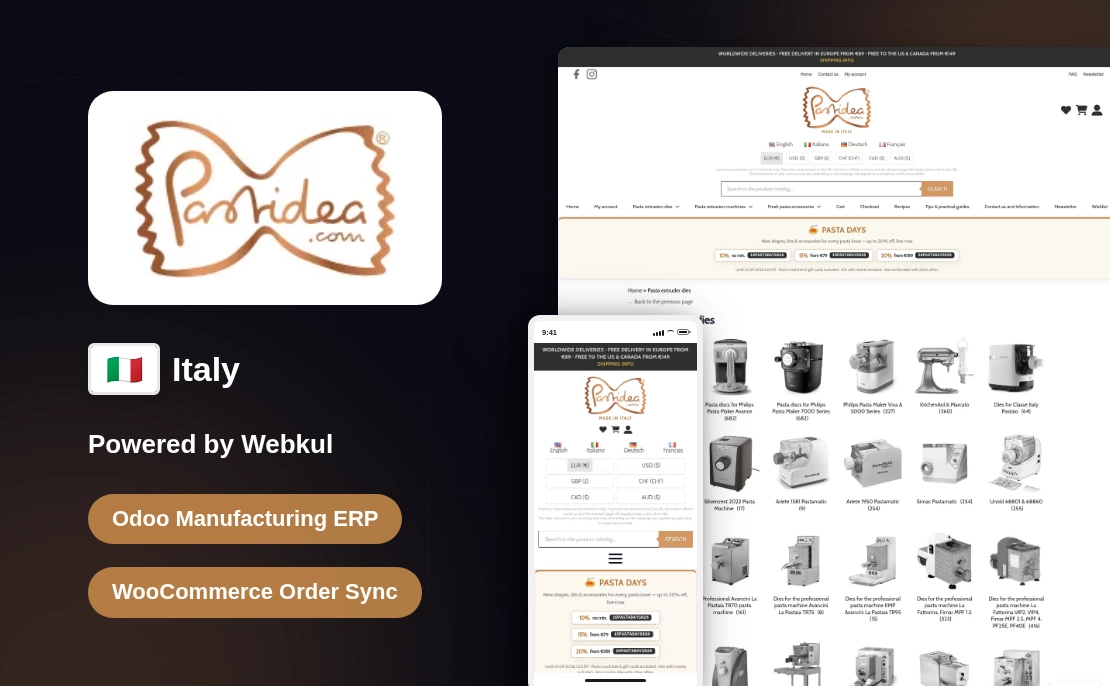
Formatre S.R.L. is an Italian firm that designs, makes and sells pasta-making tools under its Pastidea brand.
Its core product is the pasta extrusion die, the bronze or POM disc that gives fresh pasta its shape.
The range runs to more than 200 shapes, cut for home machines such as Philips, Kenwood and KitchenAid.
Each die is made in Italy and passes a quality check before it ships.
Formatre began in 2016 as a small online shop run out of a garage.
Ten people work there today, and Pastidea now runs both the workshop and worldwide shipping in-house.
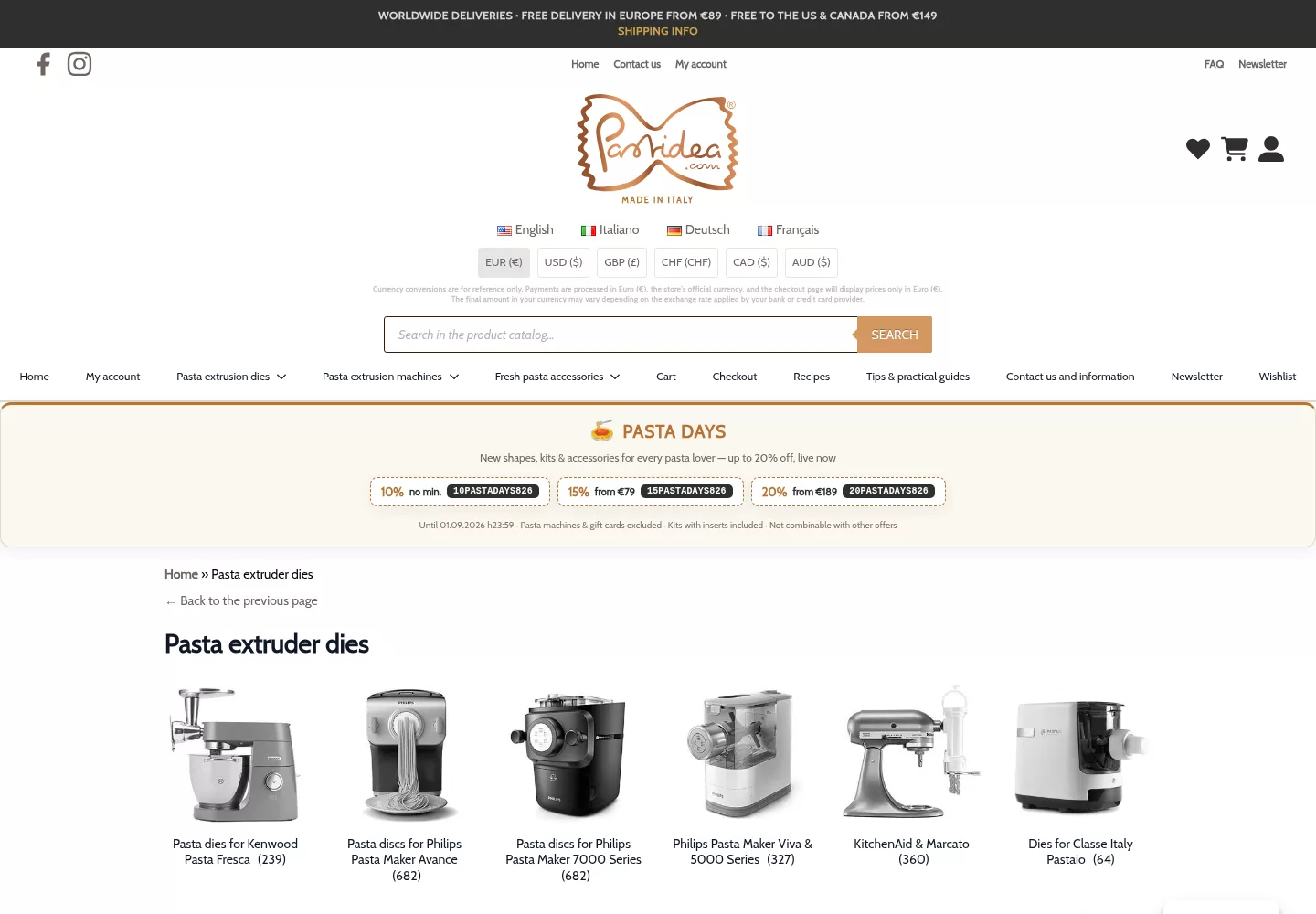
Buyers reach the brand through a four-language WooCommerce shop and through Amazon.
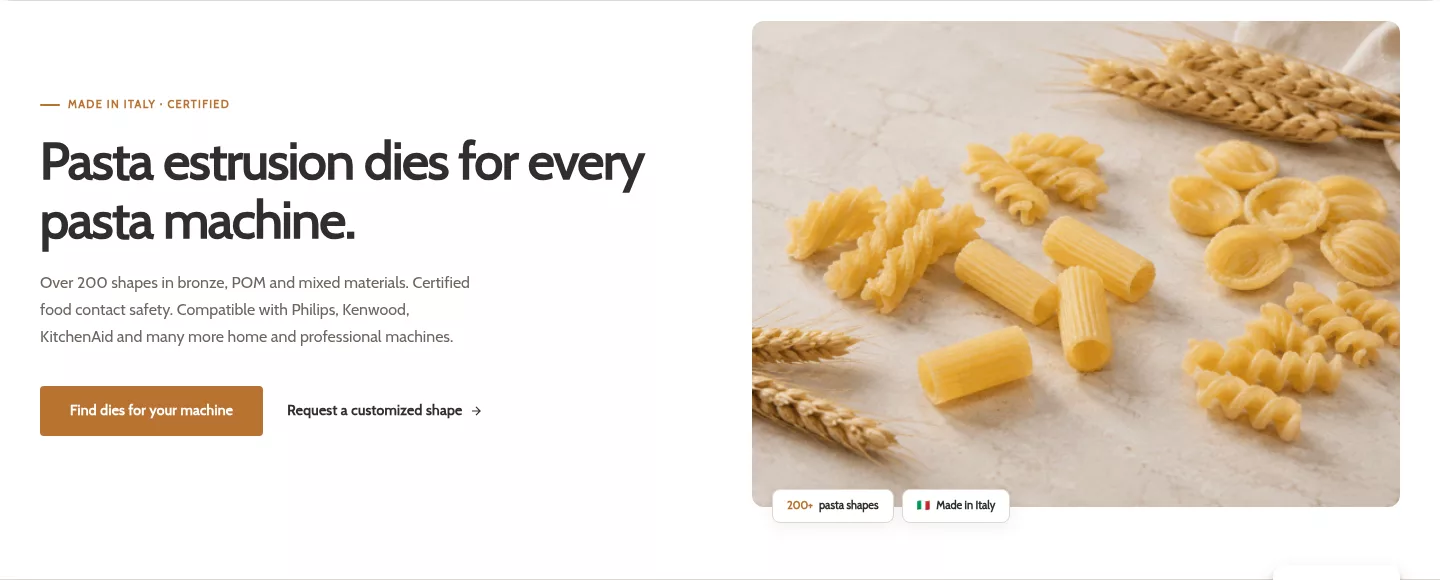
Formatre sells the same die from a workshop bench, a web shop in four languages and an Amazon storefront.
Each of those channels held its own view of stock, so the three numbers rarely agreed.
Polylang runs the web shop, and that plugin stores a product once for each language it sells in.
One die therefore existed four times online but only once on the shelf.
Stock booked against the English listing left the other three untouched, and the shop oversold.
Re-keying by hand filled that gap, and it cost the team hours it could not spare.
Meanwhile the shop floor, the buyers and the accounts team each worked from a record of their own.
Closing that gap is what the Odoo implementation had to do.
Formatre turned to Webkul, an official Odoo partner, to set up Odoo and shape it around how the firm sells.
Sales, Purchase, Inventory, Manufacturing, Accounting and staff records all went live on Odoo Enterprise v17.
On top of that, Webkul built the WooCommerce link, adapted Odoo’s Amazon connector and reworked the warehouse screens.
The Odoo implementation did not stop at go-live, and each issue Formatre reports is traced and fixed in the same system.
Formatre bought Odoo Enterprise v17 and chose to host it on a server of its own.
There, Webkul set up two installs, one for staging and one for production.
Separate add-ons paths and restart scripts keep a test from ever disturbing live data.
Nothing moved on the live WooCommerce setup, which stayed exactly where it was.
To prove the flow first, Webkul put the WooCommerce Odoo connector on staging before it went anywhere near production.
Web orders now land in Odoo on their own, and stock moves travel back to the shop.
Later in the project, the team changed what the connector sends out.
WooCommerce receives on-hand stock minus what is already going out, rather than the raw figure.
Dies promised to one buyer no longer show as free for the next.
Polylang gives each Pastidea product its own record for every language the shop sells in.
Webkul customised the connector so all of those versions map to one product in Odoo.
A stock change made in Odoo now reaches each language version of that product in WooCommerce.
An order placed on any of them reduces the same Odoo product, so the count stays honest.
Months later, stock stopped updating on three of the four languages while English kept working.
Tracing the break in that mapping, Webkul put the other three back in step.
Pastidea keeps its European Article Number (EAN) in a WooCommerce field named _rank_math_gtin_code.
Barcode readers need that same code, so Webkul mapped the field across to Odoo’s Barcode field.
A new Odoo field carries the _product_code value across as well.
Elsewhere, a fix corrected the Picking List Amazon report, which printed the template’s code instead of the variant’s.
Pickers now read the code that belongs to the exact die they are sending out.
Changing the quantity of a single product variation was taking around 44 seconds.
That sync ran in the foreground and held the screen until WooCommerce answered.
Purchase orders suffered the same way, and the wait grew with each extra product on the order.
In response, Webkul moved that work into the background, and the screen now comes back at once.
Response times on the WooCommerce side needed attention too.
Leftover WPML data was still riding along in the product API replies, so Webkul cleared it out.
Polylang was writing the same update across all the linked language products, at roughly seven to ten seconds per variant.
Measuring that behaviour showed Formatre where the rest of the delay came from.
Once staging held up, the connector went onto the production instance.
Alongside it went the Polylang work and the custom field mapping, both tested in advance.
To round the Odoo implementation off, Webkul added the Odoo Database Backup module and the Python extensions a self-hosted install needs for it.
Backups now sit with Formatre rather than in a single copy of the database.
Pastidea’s Amazon orders reach Odoo through Odoo’s own Amazon connector.
Shipping labels come out of another app, so Formatre has no use for tracking data going back through Odoo.
Webkul worked out how to stop the connector asking for and sending that data.
Because Amazon confirms tracking anyway, Webkul dropped the tracking-number and carrier rule from Amazon deliveries.
Staff can now validate those deliveries in bulk, and quantity on hand falls correctly without anyone typing a tracking number.
Reading the Amazon order reference used to mean Developer Mode, so Webkul brought the amazon_order_ref field onto a normal screen.
One stubborn SKU stopped taking Merchant Fulfilled Network (MFN) stock updates, showing zero on Amazon while Odoo held 100.
Mapping was right and the rest of the range synced normally, so Webkul is still tracing why no feed is built for that listing.
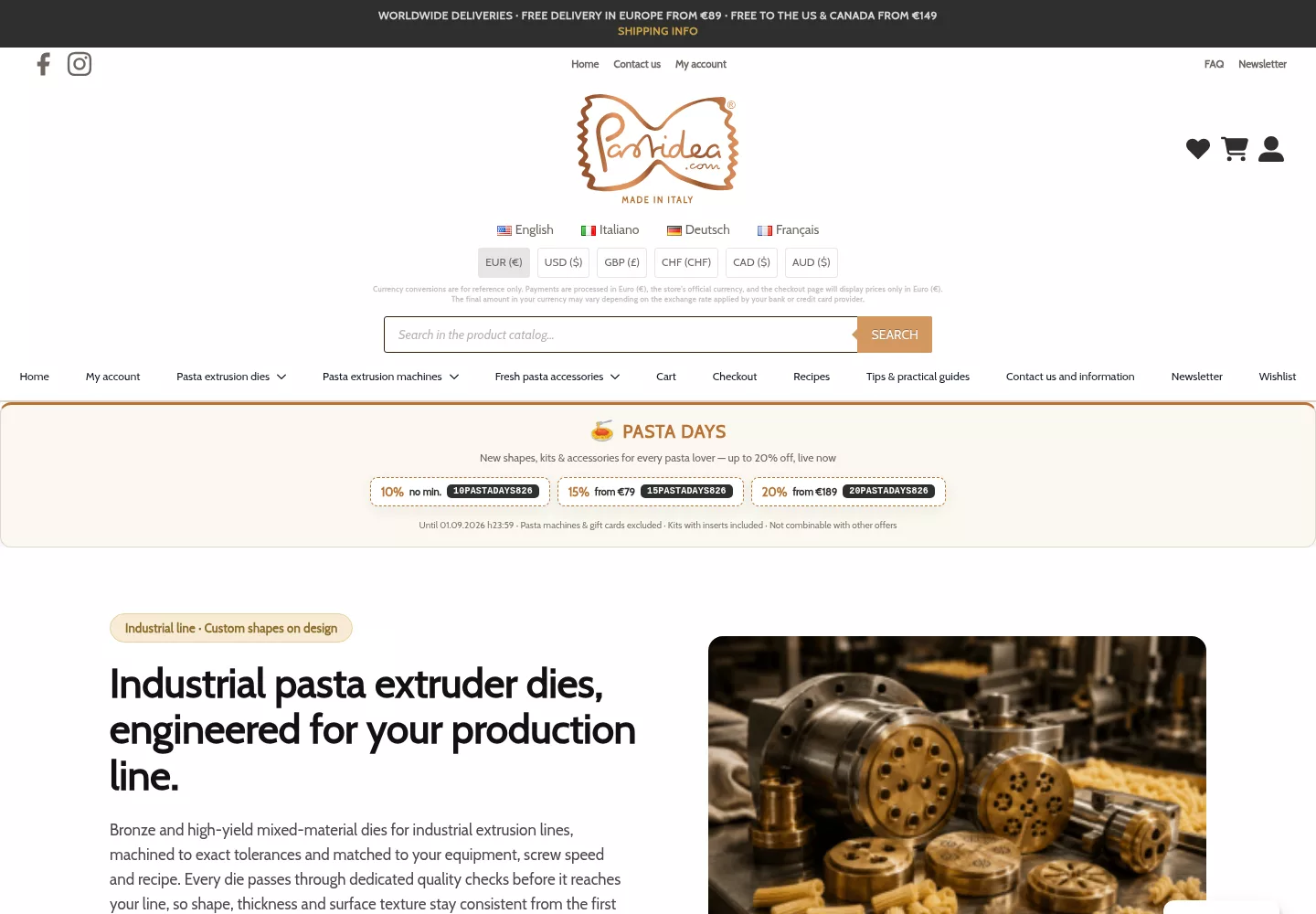
Pastidea builds manufacturing orders for dies that are cut to order or made in small batches.
Picking an operation for a work order meant leaving the manufacturing order behind.
So Webkul added an Operations tab where those operations are created and managed.
Now a dropdown on the manufacturing order lets the team choose an existing operation or create one there and then.
Rather than alter the old Operations column, Webkul hid it, and the new one stays filterable and searchable.
Product SKU and title were cut short on the Delivery Orders and Manufacturing Orders screens, readable only on hover.
Both now show in full, which matters when two die shapes differ by a single digit.
Another fix reverted recent sales template changes that were freezing Odoo Studio, and rebuilt the staging setup after it lapsed.
Pickers work through the Odoo Barcode app with their eyes on the goods rather than the screen.
So Webkul added three sound cues to that app, using audio files Formatre supplied.
An error tone fires when the scanned quantity goes past what the picking asks for.
A positive tone confirms a correct product, and a third sounds when the picking is ready to validate.
Beyond sound, Webkul widened the scanning logic as well.
Staff can scan the sales order number from the paperwork, not only the internal delivery number, and Odoo opens the matching delivery.
That number sits on the picking as the Source Document, which is the value the warehouse already reads.
Orders holding a Pimwick gift card were being skipped whole during import.
Real products in those orders never reached Odoo, so their stock never moved either.
Webkul changed the import so the rest of the order comes through however the gift card itself is handled.
A server incident later left the first machine corrupt and out of reach.
Webkul checked the saved files for malicious or encrypted content, then moved the Odoo install, databases, modules and custom code to a new server.
The Polylang work survived the move, so stock sync across the four languages resumed without a rebuild.
Similar urgent moves have come Webkul’s way before, including a Caribbean retailer facing hosting shutdown.
Formatre now runs the workshop, stock, buying, accounts and both sales channels from the Odoo implementation Webkul delivered.
The firm reports that roughly half of its former manual work is now automated.
Works orders once got hard to handle past ten different products, and they now carry hundreds of line items.
That matters most to the B2B reseller network, which orders right across the range.
Staff also finish the same workload inside normal hours instead of on overtime.
Nobody waits three-quarters of a minute for a stock edit to release the screen any more.
Because each team can see what the next one is doing, less time goes on chasing an answer.
Formatre is now weighing up more Odoo apps for other parts of the firm.
Its flexibility allows us to tailor the system to our needs, either through custom development or by using Odoo Studio to make adjustments ourselves with ease.
In the past, we often ended up producing the wrong items at the wrong time due to a lack of visibility. Now, thanks to real-time data and reporting in Odoo, we’re able to produce the right products at the right time.

Commercio Virtuoso is an Italian online marketplace designed to connect consumers with businesses that share a commitment to ethical and sustainable practices.

Bricokeys, an online hardware store based in Monaco improved customers' shopping experience and boost sales using Webkul's Preorder.
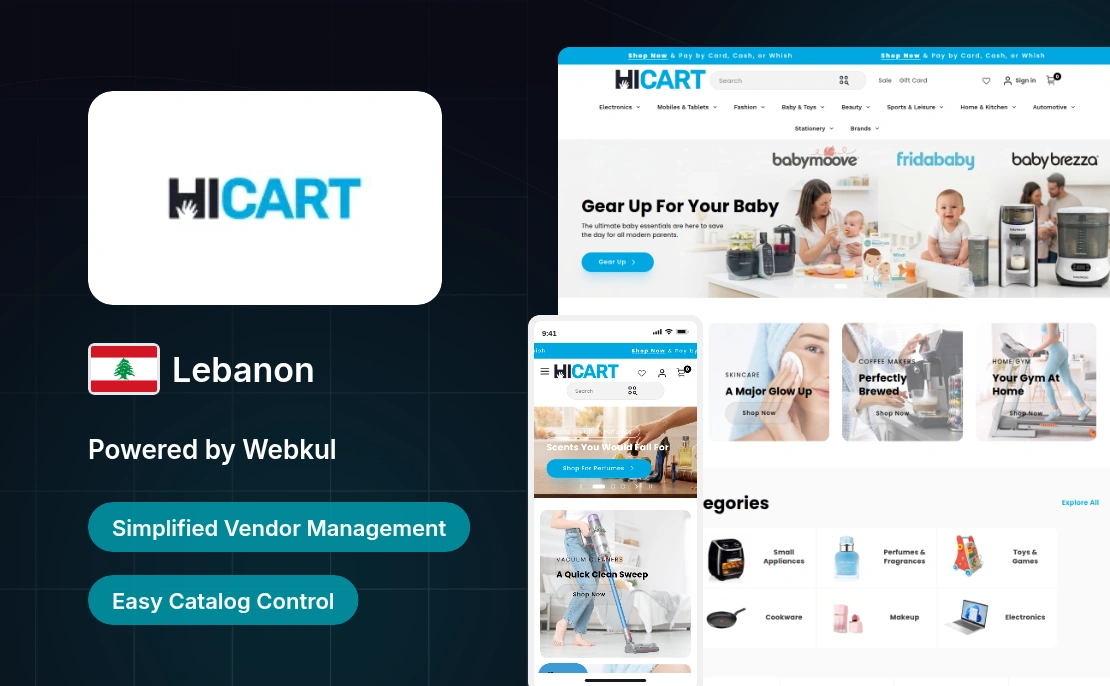
hiCart implemented Webkul Multivendor Marketplace on Shopify to manage vendors, products, orders, commissions, and centralized marketplace operations efficiently.
Start a Project
Request Personalized Demo

Message Sent!
If you have more details or questions, you can reply to the received confirmation email.
Back to Home