Akeneo PIM centralizes product data for e-commerce. It comes in Community, Growth, and Enterprise editions to fit different business needs.
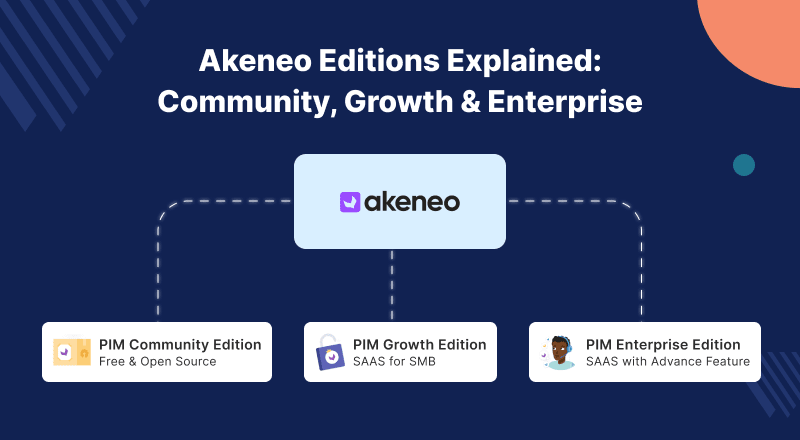
Community Edition is open-source. Growth is SaaS-based for SMBs. Enterprise, now focused on Serenity, is a SaaS model with advanced features.
Akeneo has announced the end of official support for Community Edition. Businesses need clarity on what this means for their ongoing use.
Dedicated long-term support (LTS) is available from specialized partners like Webkul, so Community users can continue without disruption.
This blog compares editions, outlines support changes, and guides you in selecting the right version for your business.
Why Picking the Right Akeneo Edition Matters
PIM software directly impacts catalog quality, time-to-market, and customer experience across ecommerce and omnichannel environments.
Akeneo editions serve different cases. Community offers open-source freedom, Growth provides SaaS convenience, and Enterprise adds governance tools.
Enterprise is now SaaS-only. Flexibility (PaaS) has been phased out, with Akeneo focusing future innovation on Serenity, its managed SaaS model.
Each edition has clear benefits. Your choice depends on budget, infrastructure preference, feature needs, and long-term business strategy.
Akeneo Editions Explained: Community, Growth & Enterprise
Akeneo Community Edition (Open Source)
Community Edition is free and open-source. It is self-hosted, customizable, and suitable for teams that want full control over infrastructure.
It provides core features like catalog management, product enrichment, and data export. Extensions can expand functionality as needed.
Though official support will end, users can continue running it with proper infrastructure and partner-backed long-term support (LTS).
Akeneo Growth Edition (SaaS)
Akeneo Growth Edition is SaaS-based. It removes the need to manage servers, offering easier setup and maintenance for small to mid-sized businesses.
It delivers PIM features with Akeneo hosting, but customization options are limited compared to Community. Integrations rely on APIs provided by Akeneo.
Growth suits merchants who prefer managed hosting and want to avoid infrastructure tasks while scaling catalog management efficiently.
Many merchants enhance Growth Edition through Akeneo eCommerce & CMS Integration Services, connecting PIM with platforms like Magento, Shopify, or WooCommerce for catalog synchronization.
Akeneo Enterprise Edition (Serenity – SaaS)
Enterprise Edition is now centered on Serenity, a SaaS model managed fully by Akeneo with advanced governance and collaboration tools.
Features include workflow validation, rights management, asset management, and advanced data modeling for complex organizations.
Flexibility (PaaS) is being phased out. Future innovation is focused on Serenity, making it the long-term path for Enterprise customers.
Comparison table for Community, Growth & Enterprise
| Edition | Hosting | Customization | Key Features | Support | Best For |
| Community (CE) | Self-hosted | Full control via code & infra | Catalog mgmt, product enrichment, exports | Official support ending; LTS via partners | Open-source adopters, dev teams |
| Growth | SaaS (Akeneo hosted) | Limited | Core PIM, API-based integrations, easy setup | SaaS subscription includes support | SMBs seeking managed hosting |
| Enterprise (Serenity) | SaaS (Akeneo hosted) | Closed, no custom code | Advanced rights mgmt, workflows, asset mgmt, rules engine | Enterprise-level support | Enterprises needing governance |
Akeneo Feature Comparison & Version Support
Akeneo editions differ in features and support. Community provides basics, Growth adds SaaS convenience, and Enterprise offers advanced tools.
Support lifecycle also varies. Community support is ending, Growth is SaaS-maintained, and Enterprise Serenity is fully managed by Akeneo.
Feature Comparison Table: Community vs Growth vs Enterprise
| Feature / Support | Community (CE) | Growth (SaaS) | Enterprise (Serenity – SaaS) |
| Catalog Mgmt | ✔https://store.webkul.com/Akeneo.html | ✔ | ✔ |
| Product Enrichment | ✔ | ✔ | ✔ |
| API Integrations | ✔ | ✔ | ✔ |
| Workflow Validation | ✖ | ✖ | ✔ |
| Rights Management | ✖ | ✖ | ✔ |
| Rules Engine | ✖ | ✖ | ✔ |
| Asset Mgmt (DAM) | ✖ | ✖ | ✔ |
| Data Quality Insights / PQ Score | ✖ | ✔ | ✔ |
| Collaboration Tools | ✖ | Limited (basic sharing, private views) | ✔ (private views, permissions) |
| Analytics / Reporting | ✖ | Limited (basic stats) | ✔ (time-to-market, completeness, job monitoring) |
| Measurement Families & Units | ✖ | ✔ | ✔ |
| Tailored Imports & Exports | ✖ | ✔ | ✔ |
| Data Cleaning | ✖ | ✔ | ✔ |
| Akeneo App Store & Apps | ✖ | ✔ | ✔ |
| Events API | ✖ | ✔ | ✔ |
| UUID Support (SKUs optional) | ✔ | ✔ | ✔ |
| User Management (Duplication, Import/Export) | ✖ | ✔ | ✔ |
| Hosting | Self-hosted | SaaS (Akeneo) | SaaS (Akeneo) |
| Customization | Full (open-source) | Limited | Closed |
| Official Support | Ending | Included | Included |
| Long-Term Support (LTS) | Via partners | Provided by Akeneo | Provided by Akeneo |
The End of Official Support for Community Edition — What It Means
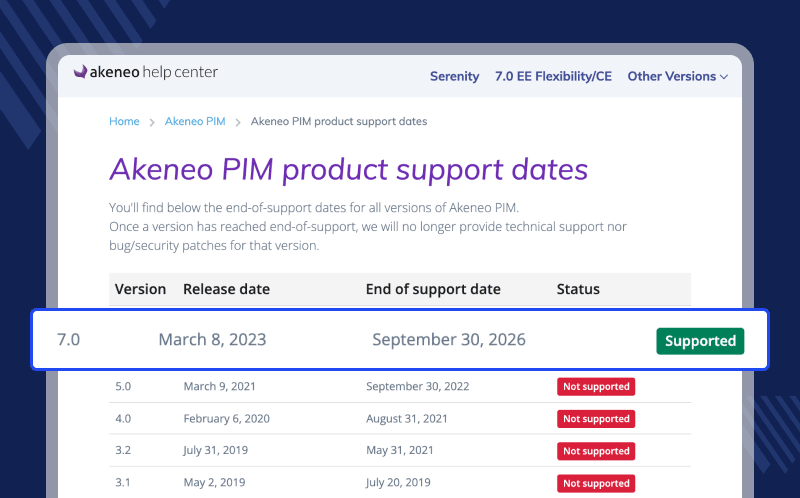
Akeneo has confirmed that Community Edition will no longer receive official support or updates. This change has raised questions for many users.
This information can also be verified in the article “Embracing the Future of SaaS with Akeneo Serenity” by Fred de Gombert, CEO of Akeneo.
The end of official support does not mean the software stops working. Community Edition remains open-source, free, and fully functional.
Merchants can continue using CE with confidence. With the right infrastructure and partner-backed long-term support (LTS), it stays reliable.
This ensures businesses who prefer open-source control can still manage catalogs and product data without being forced into SaaS migration.
Long-Term Support for Akeneo Community Edition
Akeneo Open Source Long-Term Support (LTS) extends the life of Akeneo CE beyond its official end of support, ensuring stability and security for ongoing use.
LTS typically includes security patches, bug fixes, and compatibility updates, helping businesses run CE safely on modern infrastructure.
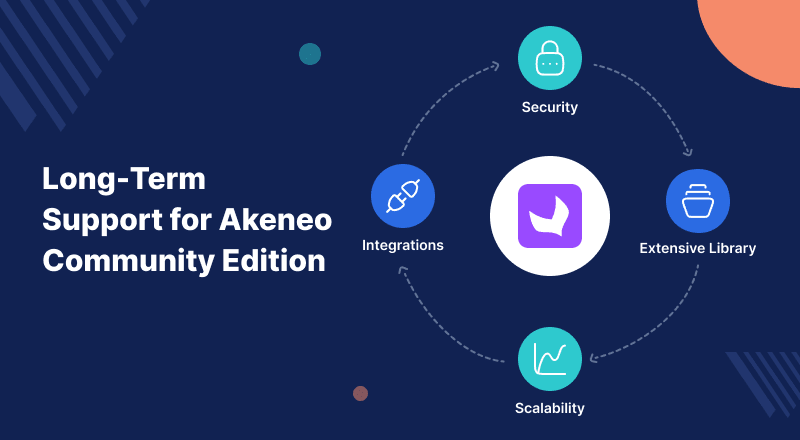
It allows companies to keep their open-source setup without worrying about sudden downtime or incompatibility with new systems.
Specialized partners provide this support. With expert help, businesses can maintain CE while planning future upgrades or migrations at their own pace.
To enhance media organization and consistency in LTS environments, Akeneo Digital Asset Management Services help manage images, videos, and documents efficiently across channels.
Which Edition Should You Use? Decision Criteria
Choosing the right Akeneo edition depends on your business size, hosting preference, features, and long-term strategy.
Even though official Community Edition support is ending, dedicated long-term support (LTS) via partners like Webkul ensures continued stability.
When CE is a Good Choice (with LTS support)
- Open-source and self-hosted for full infrastructure control.
- Core features: catalog management, product enrichment, exports.
- Flexible for custom workflows and extensions.
- Long-term support available via specialized partners.
- Ideal for teams confident in managing infrastructure.
Businesses relying on Community Edition often enhance functionality through Akeneo Custom Extension Development, enabling automation, workflow customization, and advanced integrations.
When Growth Edition Makes Sense
- SaaS-hosted by Akeneo; no server management needed.
- Limited customization compared to Community Edition.
- Supports API-based integrations for catalog expansion.
- Best for SMBs seeking hassle-free setup and maintenance.
- Support included with subscription.
When Enterprise Edition Is Worth the Investment
- Fully managed SaaS with advanced governance features.
- Features: workflows, rights management, asset management, rules engine.
- Suited for large organizations with complex catalogs.
- Focused on long-term innovation within Akeneo Serenity.
- Enterprise-level support included.
Decision Table: Choosing Your Edition
| Edition | Hosting | Customization | Key Features | Support | Best For |
| Community (CE) | Self-hosted | Full control via code & infra | Catalog management, product enrichment, exports | LTS via partners (Webkul) | Dev teams, open-source adopters |
| Growth | SaaS (Akeneo hosted) | Limited | Core PIM, API-based integrations, easy setup | SaaS subscription includes support | SMBs seeking managed hosting |
| Enterprise (Serenity) | SaaS (Akeneo hosted) | Closed, no custom code | Workflows, rights management, asset management, rules engine | Enterprise-level support | Large organizations needing governance |
Migration, Upgrades & Future-Proofing
Planning for future growth requires understanding upgrade paths, migration strategies, and version compatibility.https://store.webkul.com/Akeneo.html
Even though Community Edition support is ending, LTS via partners like Webkul allows safe migration or continued use.
Upgrading Paths (CE → Growth or Enterprise)
- CE users can move to Growth Edition for SaaS-managed hosting.
- CE users can migrate to Enterprise (Serenity) for advanced governance.
- Upgrades involve data export/import, API adjustments, and workflow mapping.
- Migration ensures business continuity without losing catalog data.
Data Migration Challenges & Strategies
- Data structure differences can require mapping between editions.
- Product attributes, categories, and assets need careful migration planning.
- Use automated tools or partner expertise to avoid errors.
- Backup data before migration for safetE migrations need comy and rollback options.
Version Compatibility & API Changes
- Akeneo versions may introduce API changes affecting integrations.
- Growth and Enterprise editions are SaaS-managed, reducing maintenance overhead.
- CE migrations need compatibility checks for Akeneo extensions and custom code.
- Staying updated prevents disruption in catalog management and integrations.
Working with an Akeneo Implementation Partner / Development Support
Expert help ensures smooth setup, migration, and ongoing PIM management.
Why Akeneo Expert Help Matters
- Reduces errors during installation, customization, and migration.
- Ensures catalog data stays consistent and secure.
- Provides guidance on edition choice and future upgrades.
- Helps teams adopt best practices efficiently.
What to Look for in an Akeneo Partner
- Proven experience with Akeneo editions and upgrades.
- Ability to provide long-term support (LTS) for Community Edition.
- Knowledge of API integrations, workflows, and asset management.
- Offers guidance without forcing a particular edition choice.
How Webkul Complements Your Journey
- Provides long-term support for Community Edition users.
- Assists with migration, customization, and development needs.
- Offers expertise across Growth and Enterprise editions.
- Helps businesses maintain continuity while planning upgrades.
Conclusion & Next Steps
Choosing the right Akeneo edition depends on your business size, hosting preference, and feature needs.
Community Edition remains a viable open-source option with long-term support (LTS) from partners like Webkul.
Growth Edition suits SMBs seeking SaaS convenience and easy setup, while Enterprise (Serenity) is ideal for organizations needing advanced governance.
Planning migration, upgrades, and integrations carefully ensures smooth PIM operations and future-proofing.
For expert guidance, long-term support, or development assistance, consulting a trusted Akeneo partner can help maintain catalog stability and optimize your PIM setup.

Be the first to comment.