
Fashion, Argentina
Explore how an Argentinian clothing store expanded its profits and and customer experience through Webkul's POS.


CHICWISH is a US-based online fashion brand that sells dresses, tops, bottoms, outerwear, swimwear and accessories to shoppers worldwide.
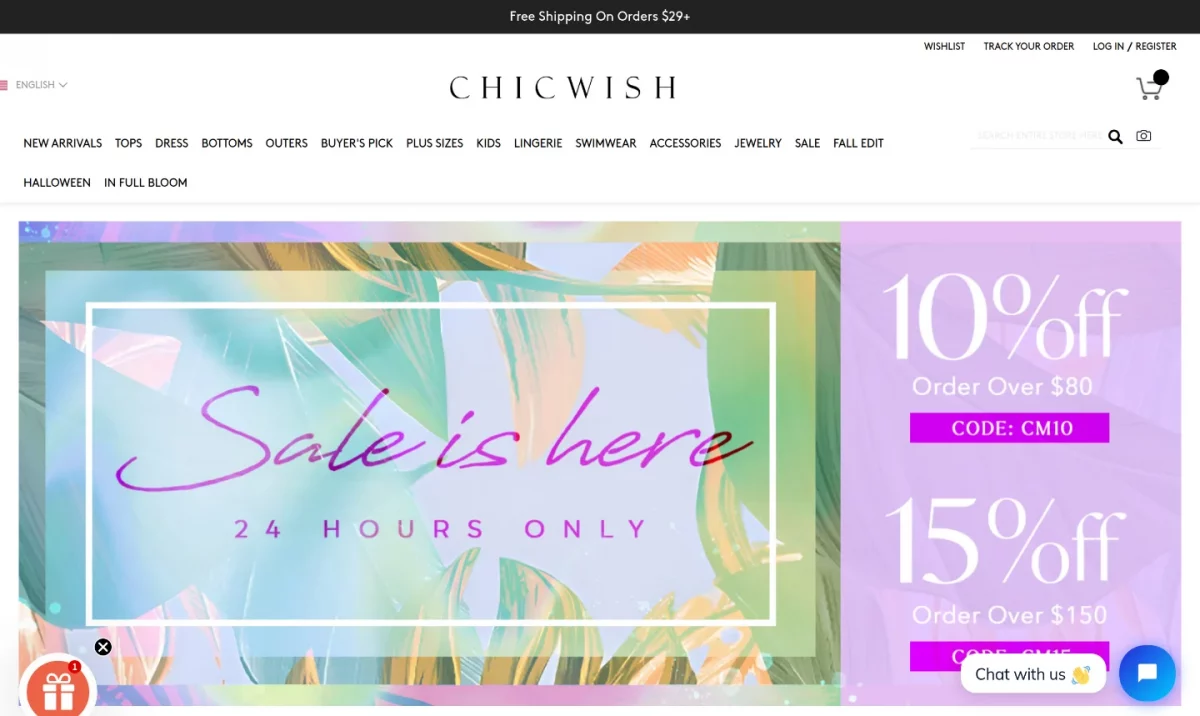
Its store also carries plus sizes, lingerie, kids’ wear and jewelry, and it draws more than 450,000 online visits a month.
New styles arrive often, so shoppers browse many products before they settle on a look.
CHICWISH runs its store on Magento 2 and has worked with Webkul on two AI projects for it.
First came AI content for products and pages, and later came custom AI product recommendations.
CHICWISH wanted product suggestions that reflect how its shoppers browse and buy.
A standard setup shows about 10 suggested items, which is a short list for a store with this much choice.
The brand also wanted suggestions beyond the product page, including at checkout and at the payment step.
Its team wanted to decide which signals drive each list, such as past orders, items bought together and recently viewed products.
Above all, CHICWISH wanted control, so staff could switch each strategy on or off without a developer.
Webkul built the project on its Magento 2 AI Product Recommendation Extension and then tailored it to CHICWISH’s needs.
As described in the extension’s user guide, it matches products using embeddings, a way for AI to measure how alike two items are.
On top of that base, Webkul’s custom extension development team added four changes for the fashion store.
Webkul raised the number of suggested products from 10 to a range of 20 to 30.
A longer list gives shoppers more styles to explore before they leave a product page.
Staff can set the exact count, so the block stays balanced with the rest of the page layout.
Webkul added placement settings so the admin can choose where each block appears.
Suggestions can show on the product page, the checkout page and the payment page.
This gives CHICWISH a chance to suggest items at the moment a shopper is about to buy.
Webkul made the AI logic customizable, so each list can draw on different buying signals.
Order data lets the logic learn from what CHICWISH customers have bought in the past.
A Frequently Bought Together strategy pairs items that often share a cart, like a dress and a matching jacket.
Recently viewed products can also feed the list, so shoppers find styles they looked at earlier.
Webkul made the whole recommendation logic configurable from the Magento admin.
Staff can turn strategies such as Customers Also Viewed and Frequently Bought Together on or off.
With this setup, the CHICWISH team can adjust its suggestions as the catalog and campaigns change, without changing any code.
Before the recommendations work, Webkul set up the Magento 2 ChatGPT AI Extension on the CHICWISH store.
Writing product, category and CMS page content by hand had been slow, and keeping it consistent was hard.

With the extension, the team uses ChatGPT, Gemini and Ollama to create multilingual, attribute-based content in bulk.
Staff now generate product descriptions, SEO meta details and category text from reusable AI prompt templates.
As a result, content stays consistent across the catalog and new products reach the store faster.
Webkul gave CHICWISH AI product recommendations that its own team can shape, place and tune from the Magento admin.
Shoppers can be shown up to 30 related styles, drawn from real order data, shared carts and recent browsing.
Placement options let the brand suggest items on product pages and at checkout, where buying intent is highest.
Together with AI-written content, the work gives CHICWISH one AI toolkit for both describing and suggesting products.

Explore how an Argentinian clothing store expanded its profits and and customer experience through Webkul's POS.

UK Textile Brand used Sample Product extension to help customers to make informed decisions on their online e-commerce platform before making an actual purchase.

Beauty Street, a French professional apparel brand, automated their order, customer, and product data sync between PrestaShop and Salesforce.
Start a Project

Message Sent!
If you have more details or questions, you can reply to the received confirmation email.
Back to Home