Adobe Commerce ACCS is a SaaS ecommerce platform offering managed hosting, faster scaling, and flexible storefronts for enterprises.
This guide explains how ACCS works, where it fits, and how it compares with Adobe Commerce Cloud and Magento Open Source.
Many ecommerce businesses move to cloud based systems because old hosting setups take more time to manage, update, and secure.
With ACCS, Adobe manages hosting, updates, security, performance monitoring, and system scaling.
This helps internal teams spend more time on sales, product growth, and customer experience.
This model is useful for brands that run large catalogs, seasonal campaigns, multi region stores, or high traffic product launches.
For global brands, it supports multi region ecommerce operations, headless commerce, and API first commerce architecture.
What is Adobe Commerce as a Cloud Service?
Adobe Commerce ACCS is a cloud based ecommerce platform for large businesses and enterprise stores. Adobe fully manages the system.
In simple terms, Adobe Commerce as a Cloud Service is a managed SaaS version of Adobe Commerce.
Adobe runs the platform infrastructure. Businesses manage products, customers, storefronts, and daily store tasks.
Adobe handles hosting. It also handles system updates, security patches, performance checks, and scaling. Businesses do not manage servers or core infrastructure.
The platform supports headless commerce. The frontend and backend work separately using APIs.
Businesses can build or update storefronts without changing the core system. A company can redesign a website or app without affecting orders or product data.
This setup gives retail teams more flexibility. They can manage websites, apps, product catalogs, and customer data across different markets.
Adobe Commerce also connects with Adobe Experience Cloud. This helps teams use data tracking, personalization, and customer experience tools in online stores.
Why Businesses Are Choosing Adobe Commerce SaaS
Businesses choose Adobe Commerce SaaS because it reduces infrastructure work and supports faster digital commerce operations.
Handles High Traffic
Online stores often see traffic spikes during sales, product launches, and seasonal events. ACCS uses elastic scaling to support these traffic spikes.
This helps reduce downtime risk and keeps the shopping experience more stable during busy periods.
Reduces Technical Work
Adobe manages hosting, updates, security, and monitoring. This lowers the need for large DevOps teams and helps technical teams focus on business features.
Faster Feature Delivery
Traditional systems often need long upgrade cycles. ACCS allows faster release of new features because platform updates are handled in the background.
Teams can launch campaigns, storefront changes, and product updates with fewer delays.
Better Global Performance
ACCS uses cloud infrastructure and edge delivery to improve website speed across different regions. This supports better performance for global ecommerce stores.

Adobe Commerce ACCS vs Adobe Commerce Cloud vs Magento Open Source
Businesses often compare Adobe Commerce ACCS with Adobe Commerce Cloud and Magento Open Source before choosing a platform.
| Feature | ACCS (SaaS) | Adobe Commerce Cloud (PaaS) | Magento Open Source |
|---|---|---|---|
| Hosting | Adobe managed | Shared responsibility | Self managed |
| Infrastructure | Fully managed | Partially managed | Managed by business |
| Updates | Automatic | Manual or planned | Manual |
| Customization | Medium | High | Very high |
| Technical Work | Low | Medium | High |
| Scaling | Automatic scaling | Depends on setup | Depends on hosting |
| Security | Managed by Adobe | Shared responsibility | Managed by business |
| Time to Launch | Fast | Moderate | Slow |
| Cost Model | Subscription based | Variable cost | Variable cost |
| Backend Access | Limited | Partial | Full control |
This table helps compare control, flexibility, maintenance effort, and launch speed across different ecommerce models.
Key Benefits of Adobe Commerce ACCS
Adobe Commerce ACCS includes several features that make it easier to run, maintain, and grow an e-commerce business.
Automatic Scaling for High Traffic Stores
ACCS automatically scales resources with traffic, keeping stores stable during sales, campaigns, and product launches without manual intervention.
Managed Hosting, Security, and Updates
Adobe manages the cloud infrastructure, hosting, updates, monitoring, and security patches.
This reduces day-to-day maintenance work and helps teams avoid delays caused by manual upgrades.
Strong Security Support
Security updates are managed at the platform level. This helps reduce risks from outdated software and supports safer enterprise ecommerce operations.
Headless and API First Commerce Architecture
ACCS supports headless commerce using APIs. Businesses can build storefronts with React, Progressive Web Apps, or mobile apps while keeping backend systems stable.
Composable Commerce Setup
The platform supports composable commerce architecture, where different tools work together.
It can connect with ERP, CRM, CMS, search, marketplace, and personalization tools.
This gives ecommerce teams more flexibility when they manage complex business systems.
AI and Personalization Features
Adobe Experience Cloud integration supports AI based features like product recommendations, personalized search, and customer segmentation.
These features help brands show more relevant products and improve customer engagement.
Better Cost Control Over Time
Adobe manages infrastructure and platform work. This helps businesses reduce server costs.
Businesses also spend less on maintenance. They also spend less time on upgrade planning.
ACCS reduces TCO by minimizing server management, upgrades, and infrastructure tasks, freeing teams to focus on business priorities.
Challenges to Consider Before Choosing ACCS
Businesses should review Adobe Commerce ACCS limitations and platform requirements before planning migration or making an adoption decision.
Limited Backend Changes
ACCS is a managed platform, so deep backend changes are limited. Custom features often need API based development instead of direct code changes.
Migration Effort
Migrating to Adobe Commerce ACCS requires reviewing data, extensions, storefronts, integrations, and custom workflows before implementation.
Businesses can also use Adobe Commerce SaaS implementation services to manage migration, API integrations, storefront setup, and deployment planning.
Extension Compatibility
Some Magento extensions may not work directly in ACCS. These extensions may need updates or redevelopment before use.
Adobe Ecosystem Dependence
ACCS works best with Adobe tools. Some third party tools may need extra setup, testing, or integration work.

Adobe Commerce ACCS Migration Considerations
Before adopting Adobe Commerce ACCS, businesses should assess their Magento setup, custom modules, third-party extensions, and integrations.
A practical Adobe Commerce migration plan should include product data. It should also include customer data and order history.
Payment setup and shipping rules should be reviewed. ERP systems, CRM tools, and marketplace connections should also be added.
Teams should also choose the frontend setup. They can use a headless storefront, a PWA, or another frontend option. This helps reduce delays in development and testing.
Adobe Commerce SaaS projects require reviewing custom features, checkout, ERP, CRM, payments, shipping rules, and frontend configuration.
For highly customized stores, some features may need rebuilding using APIs. ACCS gives less direct control than Magento Open Source.
ACCS and Headless Commerce
It supports headless commerce through APIs. This allows businesses to separate frontend and backend systems for more flexibility.
API Based Integration
APIs connect ecommerce systems. These include online stores, mobile apps, ERP systems, and marketplaces. This helps teams manage data across many channels.
Flexible Frontend Options
Developers can use React or PWA. They can also use other frontend tools. These help build modern online stores. They also help improve user experience.
Faster Page Performance
Edge delivery improves loading speed by serving content closer to users. This is useful for global ecommerce platforms with customers in many regions.
Multi Channel Support
ACCS supports sales across web, mobile apps, social platforms, and physical stores. This helps businesses manage omnichannel commerce operations.
Business Use Cases for Adobe Commerce as a Cloud Service
Adobe Commerce ACCS can be used by different types of businesses that need a scalable and easy to manage ecommerce platform.
Fashion and Retail
Helps handle high traffic and large product lists during sales, festivals, and seasonal launches.
B2B Ecommerce
Supports bulk orders, custom pricing, account based buying, and large customer groups.
Marketplace Models
Works for multi seller platforms with many vendors, product listings, and connected systems.
Product Launches
Manages sudden traffic spikes during marketing campaigns and new product releases.
Omnichannel Businesses
Supports businesses selling across online, mobile, marketplace, and offline channels.

Who Should Choose Adobe Commerce ACCS?
ACCS is suitable for:
- Large enterprise ecommerce companies
- Global retail brands with multi region ecommerce operations
- Multi store businesses
- B2B and B2C commerce operations
- Teams with limited DevOps support
- Brands that want a managed ecommerce platform
It is a good fit for businesses that want better ecommerce scalability without managing heavy infrastructure.
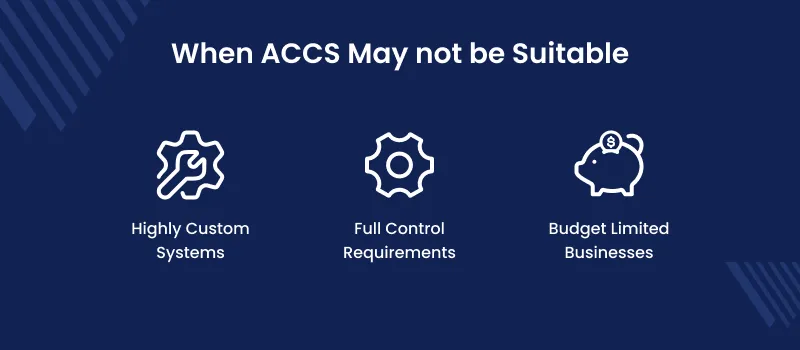
When ACCS May Not Be Suitable
Adobe Commerce ACCS may not suit every business, especially those with specific customization, budget, or technical requirements.
Highly Custom Systems
Businesses with deep Magento customization may face migration challenges.
Full Control Requirements
Companies that need full server or backend access may not find ACCS suitable.
Budget Limited Businesses
Smaller companies may prefer Magento Open Source or basic cloud hosting due to lower cost.
Future of Adobe Commerce SaaS
Ecommerce is moving toward cloud based and API driven systems. Businesses want platforms that are easier to manage, faster to update, and simpler to scale.
Key trends include:
- AI based shopping experiences
- Serverless architecture
- API first development
- Faster website performance
- Flexible composable commerce systems
- Edge based storefront delivery
- Growth of global enterprise adoption
These trends support large scale retail systems and improve efficiency across multi region ecommerce operations.
Conclusion
Adobe Commerce ACCS is a cloud ecommerce platform for enterprise businesses. It reduces infrastructure work and supports better scaling and storefront speed.
Supports automation and APIs. It also supports headless commerce and modern storefront setups for global use.
Before choosing it, businesses should check customization needs. They should also check migration work, integration setup, and long term commerce goals.
For brands that want a managed SaaS ecommerce solution, Magento as a Cloud Service can be a strong option.
FAQs
Adobe Commerce ACCS manages hosting, updates, security patches, scaling, and monitoring so businesses can reduce manual infrastructure work.
Yes, ACCS uses APIs to help businesses build separate storefronts for websites and mobile apps.
ACCS can handle more traffic during sales and seasonal campaigns, helping stores stay stable.
Yes, ACCS supports ecommerce stores in many regions and helps improve website speed for global customers.
Adobe handles infrastructure and maintenance tasks, which reduces dependency on large DevOps teams for ecommerce operations.
Businesses can customize the frontend using APIs, React storefronts, and headless commerce development.
Yes, ACCS supports API based integrations with ERP, CRM, CMS, marketplaces, and other third party business tools.
Adobe helps keep ecommerce stores safe by handling security updates and monitoring.
Yes, businesses can migrate from Magento Open Source to ACCS, though planning, testing, and frontend updates are required.
ACCS supports ecommerce across websites, mobile apps, marketplaces, and offline channels through API based architecture.

Be the first to comment.