
Marketplace, Mexico
Explore how Maxican based company manage thier product information with the help of Webkul.

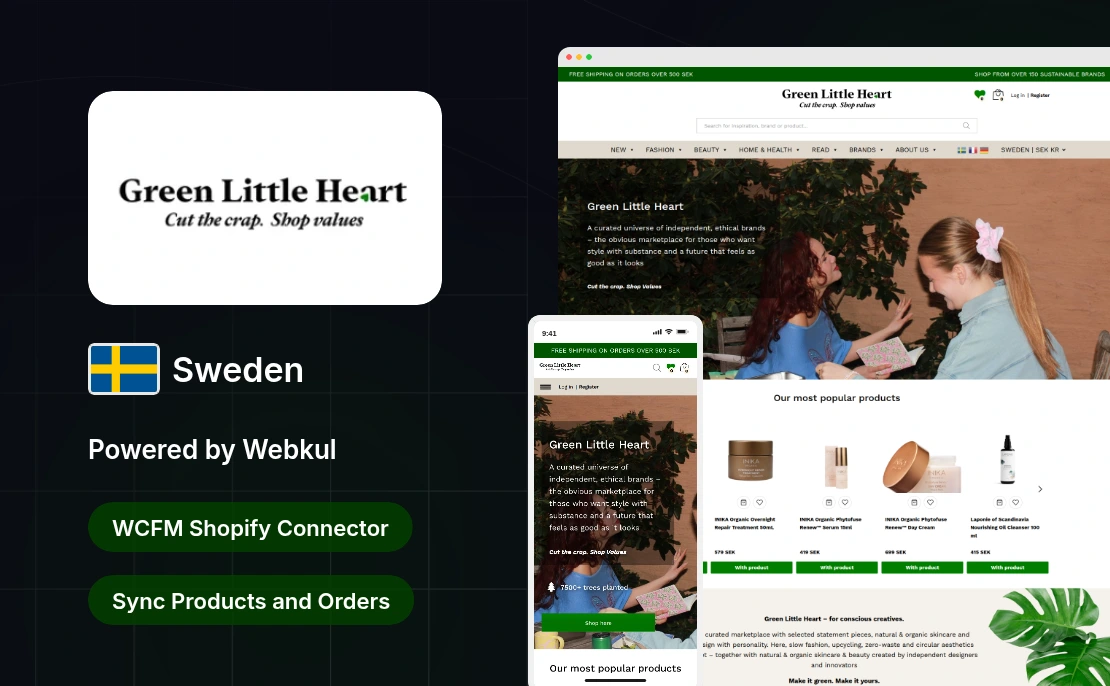
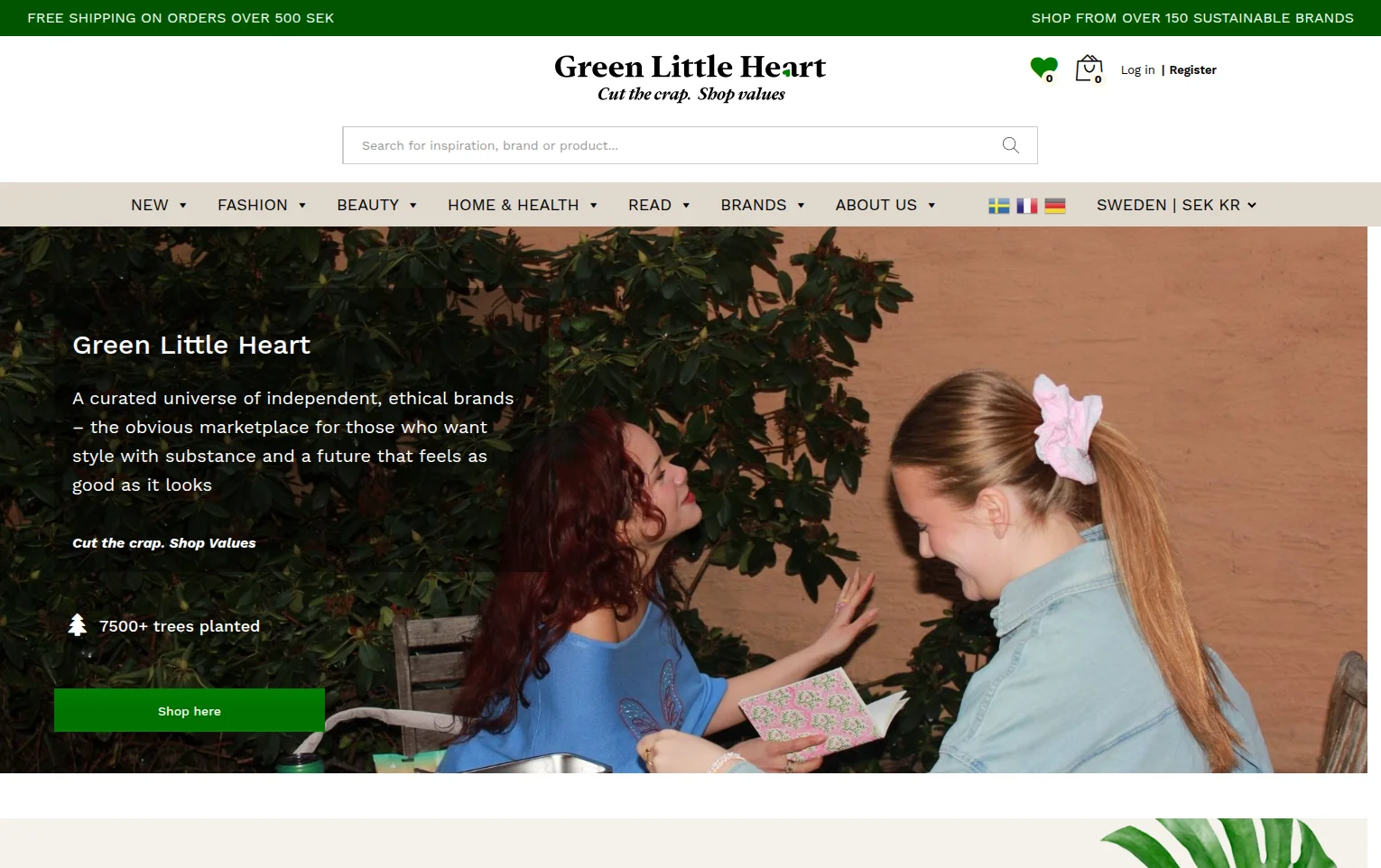
Green Little Heart is a Swedish marketplace for small brands that make goods with care for people and nature.
Its online range covers slow fashion, design, skin care, health, and low-waste goods for mindful shoppers.
The marketplace brings many sellers together, while each vendor ships orders straight to the buyer.
Approved sellers also get a dashboard where they can manage products, orders, and their store.
But some sellers manage their goods in Shopify, while others run a separate WooCommerce shop.
Vendors needed to connect an active online shop without entering the same product data twice.
Products had titles, prices, stock, images, text, traits, categories, brands, and more across separate systems.
Manual work could leave product facts or stock out of step between a vendor shop and the marketplace.
The project needed clear rules since each vendor could link one Shopify shop or one remote WooCommerce store.
Chosen Shopify metafields also had to reach WooCommerce and appear with the product text.
Webkul linked vendor shops with the WCFM marketplace and set sync rules that fit its sales model.
The project used Webkul’s connector as its base, with custom eCommerce work for prices, store choice, and Shopify metafields.
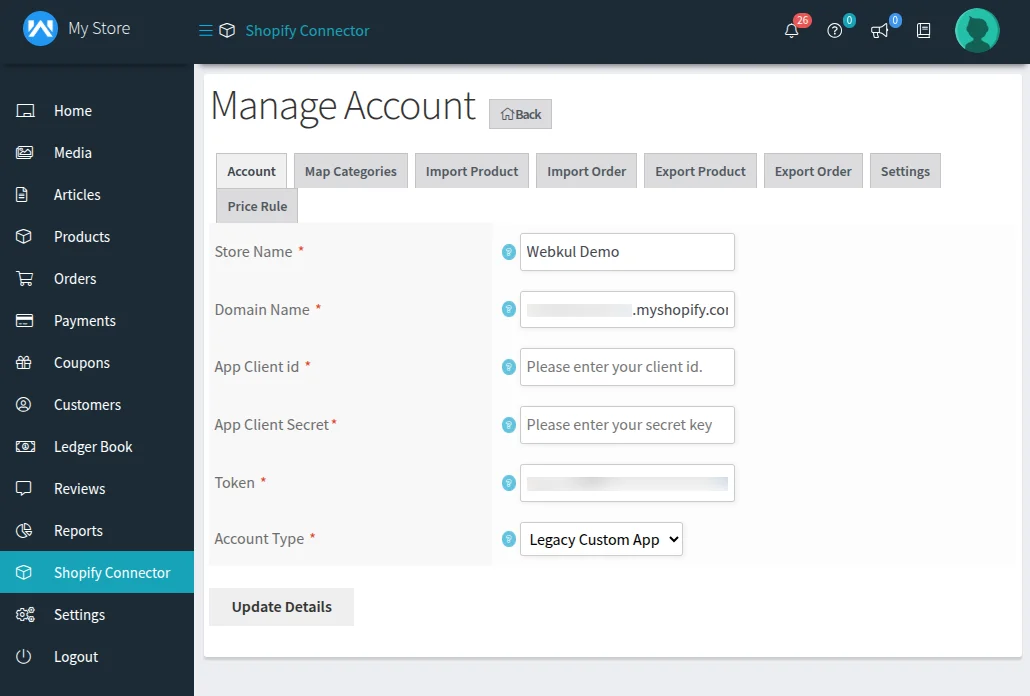
Vendors can import products from Shopify into their WCFM store and export marketplace products back to Shopify.
The flow handles common product data, such as titles, stock, prices, images, text, traits, and supported product types.
Category mapping puts Shopify products in the right WooCommerce groups, while unmapped items can use a default group.
Order sync also links marketplace sales with the vendor store when the same item exists on both systems.
Webkul added a price rule that lets the marketplace admin edit a product’s price after its first Shopify import.
Later sync runs keep that set price while updating other chosen product fields from the linked shop.
The same price rule works for vendors linked through the custom outside WooCommerce flow.
Each vendor must pick one source, so a Shopify link blocks a later link to another WooCommerce shop.
Another setting lets the team turn title sync on or off between WCFM and an outside WooCommerce shop.
Webkul added a Metafields Import area that gets all Shopify metafields during the first import.
Vendors can pick the fields for later product syncs, while chosen values stay apart in the backend.
When a Shopify product sync runs, WooCommerce gets the chosen values and adds them below the product text.
This one-way flow moves metafields to WooCommerce, with no edits or reverse sync from the marketplace.
A metafield-only change does not start a job, but its new value arrives with the next product sync.
The team gained a managed link between its WCFM marketplace and the shop systems already used by vendors.
Sellers can reuse product data rather than build every listing again inside the marketplace.
At the same time, the team keeps control of prices and limits each vendor to one source shop.
Chosen Shopify details, such as ingredients or usage notes, can now follow each item into WooCommerce.

Explore how Maxican based company manage thier product information with the help of Webkul.
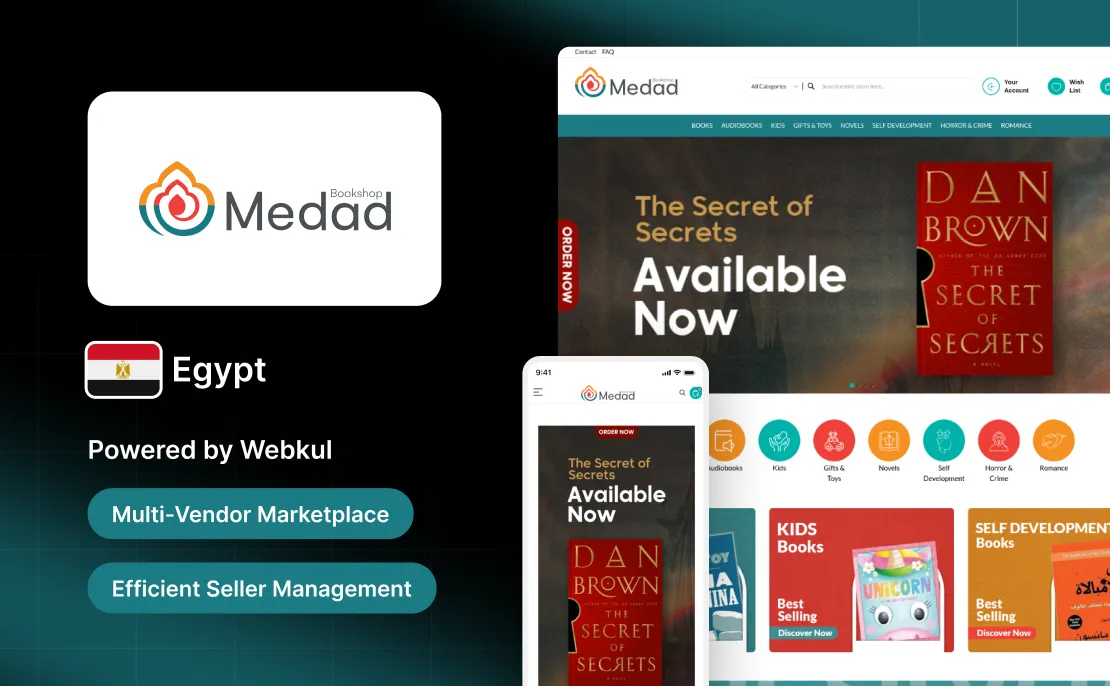
This Egypt-based bookstore marketplace uses Webkul’s Magento 2 Multi-Vendor Marketplace to efficiently streamline sellers and online shopping.
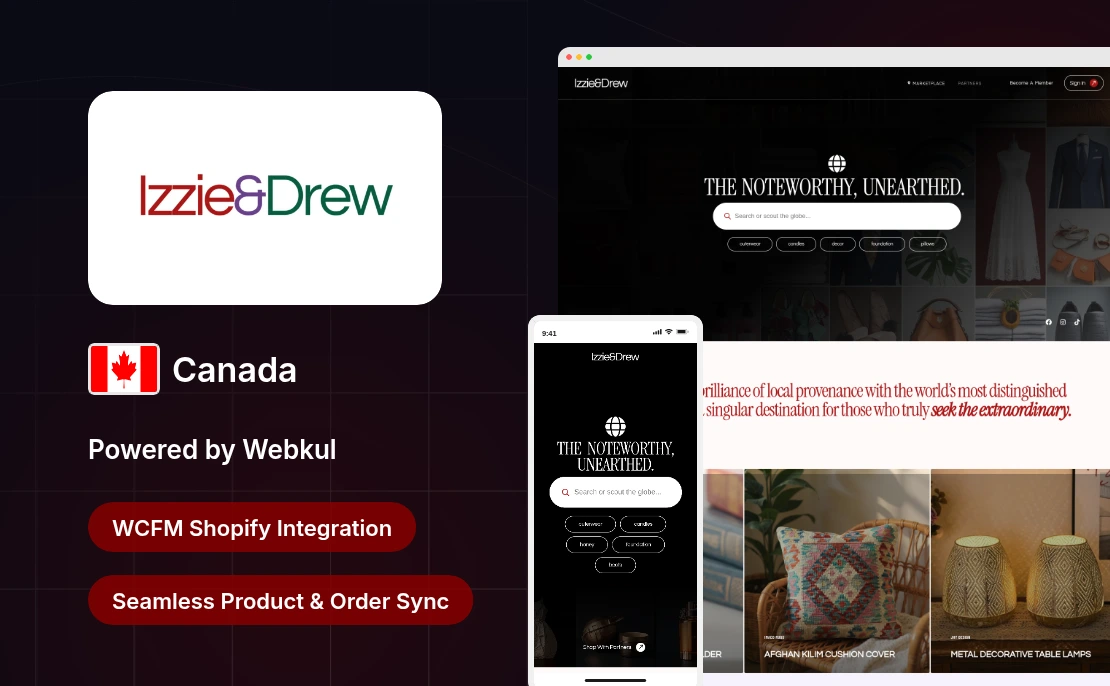
Izzie Drew from Canada uses WooCommerce WCFM Shopify Connector to sync products and orders, improving store management.
Start a Project

Message Sent!
If you have more details or questions, you can reply to the received confirmation email.
Back to Home