Many brands are now finding new ways to improve online shopping and make it more enjoyable for customers.
Headless eCommerce is one such method that separates how a store looks (frontend) from how it works behind the scenes (backend).
In this blog, “What is Headless eCommerce?”, we’ll explain how it works, why it matters, Benefits, Future of eCommerce and the main trends driving its growth.
With the rise of headless services, teams can now connect multiple systems, tools, and APIs to create flexible, scalable, and personalized shopping experiences.
Modern platforms such as Bagisto Headless eCommerce, Shopify Plus (Hydrogen), Medusa, and BigCommerce embrace headless architecture with powerful GraphQL and REST APIs for limitless customization
This gives businesses full freedom to design their storefronts while keeping their systems secure and reliable.
Let’s Understand Headless eCommerce
The eCommerce industry is changing quickly. Shoppers now expect a smooth, fast, and easy buying experience on every device.
People no longer shop only on computers. They use mobile phones, tablets, and even voice assistants like Google Home or Alexa.
Online stores must now adjust to these new shopping habits and offer the same quality experience everywhere.
For store owners who want to grow, the first step is to find what needs improvement in their website and customer experience.
It is also important to think about the future and plan how the store will perform and expand in the coming years.
By improving speed, design, and personalization, businesses can increase visibility, attract more visitors, and boost sales.
In this blog, we will explore the headless eCommerce platform, understand how it works, and see how it differs from traditional online stores.
Not Sure if Headless eCommerce is Right for Your Business?
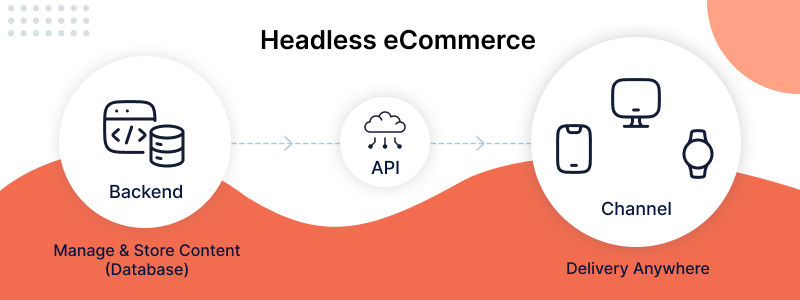
Headless eCommerce is a setup where the backend and content management systems are kept separate from the display or user interface.
This means your data, products, and content are managed in one place while the design and layout are handled elsewhere.
With this separation, store owners get more flexibility and control over the shopping experience for their customers.
Developers can use APIs or web services to send products, blog posts, or customer reviews to any screen or device.
The frontend team can also choose any framework they prefer to create a fast and engaging storefront.
Headless eCommerce is built for the connected world, where users shop through websites, apps, voice assistants, and even smart devices.
Traditional commerce systems connect the frontend and backend together, limiting how and where you can display content.
Headless architecture changes this by using APIs that allow your store to share data with modern technologies like React or React Native.
This makes it possible to show content and products on multiple channels such as mobile apps, smartwatches, Alexa, and gaming consoles.
What is Our Current Situation?
Most online stores still use an old setup called the monolithic model. In this setup, the frontend and backend are joined together in one system.
Every page is created on the server and then sent to the customer’s browser when they visit your site.
Each time a shopper opens a new page, the browser reloads everything, including the header and footer.
This process makes websites slower and less responsive, especially when there are many products or visitors.
Today’s customers want quick, smooth, and interactive shopping experiences on every device they use.
The monolithic model makes this hard because all parts of the website depend on each other.
It also limits how easily you can update your design, improve features, or add new tools.
Headless eCommerce solves this by separating the frontend and backend. It makes websites faster, flexible, and easier to manage.
Why Choose Headless Over Traditional Commerce
- Shopping habits have changed a lot in recent years, and now customers want quick, easy, and smooth online experiences.
- Regular eCommerce platforms are slower because their design and data are combined in one system.
- Headless eCommerce fixes this by separating how the store looks from how it operates.
- This separation allows your website to be faster and gives you more control, making updates and customization simpler.
- Headless stores can provide the same content across different devices like phones, tablets, watches, and smart TVs.
- Shoppers can even buy things using voice assistants like Alexa or Google Home.
- This setup gets your business ready for new devices and future shopping trends.
- Since both parts work separately, the store loads quicker and offers a better user experience.
- Headless commerce is flexible, fast, and prepared for the modern way people shop online.
Difference Between Monolithic and Headless eCommerce
| Aspect | Monolithic eCommerce | Headless eCommerce |
| Structure | Frontend and backend are tightly connected as one unit. | Frontend and backend are separated into independent systems. |
| Design & Content | Design, content, and data are all linked together, making changes difficult. | Backend manages data, while frontend handles design and user experience. |
| Flexibility | Limited flexibility; changes in one part affect the whole system. | Highly flexible; both sides can be updated independently through APIs. |
| Performance | Can slow down as the store grows due to tightly coupled architecture. | Faster performance with optimized, API-driven communication. |
| Scalability | Harder to scale because every update impacts the entire system. | Easy to scale each part independently based on needs. |
| Ease of Use | Simple for beginners but restrictive for growing businesses. | Requires technical setup but offers advanced control and customization. |
| Updates | Updates may break multiple parts of the store. | Updates can be done safely on one side without affecting the other. |
| Integrations | Limited and often complex to integrate new tools or channels. | Easily connects to apps, IoT devices, and voice assistants like Alexa or Google Home. |
| Future Readiness | Rigid and slower to adapt to new technologies. | Built for future channels and modern shopping experiences. |
What Happens When Your Store is Decoupled?
When you use a decoupled eCommerce setup, the frontend and backend run separately.
This allows your store to update or scale one side without affecting the other.
Each module becomes independent, so changes can be made faster and with less risk.
For example, the product page can be redesigned without touching backend logic.
With headless commerce, your backend can support many services at once. Voice search, mobile text search, or web checkout can all run on separate systems.
This gives your brand more flexibility and control over digital experiences. Headless commerce connects APIs with CMS, mobile apps, or any custom storefront.
Marketers can use APIs to create rich shopping experiences on different channels. It improves speed, reduces workflow issues, and keeps branding consistent.
Headless commerce also works well with React or Angular websites. It lets developers build custom layouts and smooth user journeys easily.
By using a decoupled eCommerce architecture, brands can mix strong content with fast shopping.
They no longer need to choose between design freedom and functionality. APIs manage the data exchange between all systems and platforms.
This allows IT teams to easily add or integrate new tools whenever needed, though some SaaS platforms may have limits on API usage.
Traditional Commerce
Traditional commerce uses a monolithic eCommerce model where the frontend and backend work as one system.
Many old and large businesses still use this setup because it feels stable and easy to manage.
But this model is slow to change. It needs more time and money to add new features or launch updates. Developers must change the whole system, even for small edits.
While it gives full control to the IT team, it also limits flexibility. This makes it hard to create fast, modern, and personalized shopping experiences that today’s users expect.
In short, traditional commerce vs headless commerce shows one key difference—traditional systems are strong but rigid, while headless systems are fast and flexible.
How Does a Traditional Monolithic Store Work?
Most traditional eCommerce stores built in the last decade still follow a monolithic setup.
They use platforms like Magento or SAP Hybris to manage both the backend and frontend together.
In this model, the backend creates the HTML pages and sends them to the browser. The browser then loads all extra files like JavaScript and CSS before showing the full page.
Every time a customer opens a new page, the same process repeats. The system reloads the entire page instead of only the changing parts.
This makes the site slower and keeps users waiting for content to appear.
A monolithic eCommerce store can work well for small sites, but as traffic grows, this slow process hurts user experience and conversion rates.
Limitations of Traditional Systems
Traditional eCommerce platforms work as one large setup. This limits how easily retailers and developers can update or scale their stores.
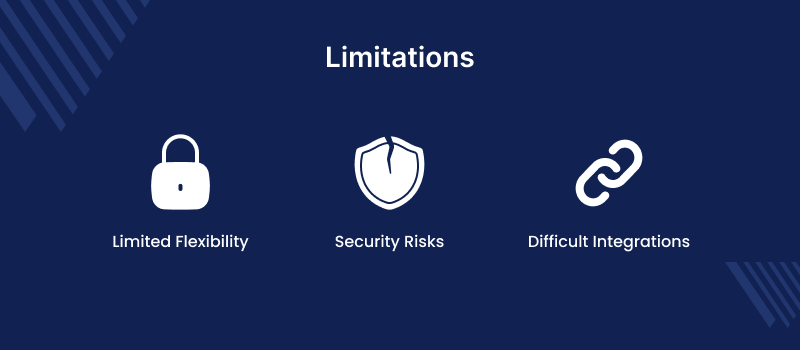
1. Limited Flexibility
Most old systems are locked to specific frameworks. Developers cannot freely change layouts or add new features, which slows innovation.
2. Security Risks
Admins and editors often share the same dashboard. If access is not managed properly, sensitive data like customer or payment details can be exposed to threats.
3. Difficult Integrations
Connecting new tools or external apps is rarely smooth. Many teams still move data by hand, which takes time and increases errors.
Traditional systems make it harder to adapt, protect, and grow in a fast changing eCommerce market.
How Does Headless Commerce Overcome These Challenges?
Headless commerce fixes many limits of traditional systems by using APIs to link different business tools and platforms.
Admins can control who gets access to each system and decide how much data the API can share. This makes the setup safer and easier to manage.
Since the frontend is separate from the backend, developers can build layouts and user interfaces with any framework they like.
This setup lets stores share products and content across websites, mobile apps, and smart devices — or any other platform connected to the internet.
What is the Impact of Headless Commerce on Your Customers?
Headless commerce helps brands move faster and meet new customer needs with better flexibility and speed.
1. Instant Updates
When new content is added, it appears right away on all devices. Traditional systems can take much longer to reflect changes.
2. Better User Experience
Brands can design creative and engaging layouts that look perfect on every screen size without worrying about display issues.
3. Stay Competitive
You can update one part of your store without touching the rest. This helps you make quick improvements and stay ahead in the market.
4. Faster Launches
Headless commerce supports new tools and technologies easily, helping you bring new features to customers faster.
5. Personalized Experience
Customers get a smooth and consistent journey across all platforms. The system uses their purchase data to show more relevant products.
6. Higher Conversions
You can test new designs or search options anytime. These quick tests help improve your store performance and boost sales.

Why is the World Going Headless?
The way people shop online is changing fast. New digital devices and high customer expectations are pushing brands to use modern, flexible systems.
As per Coherent Market Insights, the global headless commerce market is expected to grow from US$ 1.74 billion in 2025 to US$ 7.16 billion by 2032, showing a strong CAGR of 22.4%.
The web based commerce segment will lead with a 52.4% market share in 2025, as shoppers expect smooth and fast experiences on every device.
The backend technology segment is also set to lead with a 59.4% share, thanks to the rise of API first and microservice based platforms that make updates easier and faster.
North America will stay ahead with 38.6% of the market, while Asia Pacific will grow the fastest with 23.7%, driven by quick digital adoption and urban growth.
The use of AI, IoT, and Augmented Reality is helping brands build smarter, more connected, and personalized shopping experiences across all channels.
Methodologies for Developing Headless Commerce Backends and Frontends
Headless commerce can be built in many ways based on your business goals and technical setup. Both backend and frontend need to work together smoothly.
Developing a Headless Commerce Backend
In headless commerce, the backend connects all channels through APIs. It handles data and supports every device your store runs on.
If your business uses a custom built platform, migrating to a headless architecture is a smart upgrade. It gives you more freedom to grow and adapt in the future.
This setup often uses a microservice structure. Each part of the store runs separately, making updates or fixes easier and faster.
You can also use Docker containers to keep each store layer independent. This reduces risk and improves performance.
This approach suits large businesses with unique systems. It lets you rebuild your store step by step without affecting daily operations.
Methods for Developing a Headless Commerce Frontend
Creating a headless commerce frontend is simpler because it separates the frontend from the backend. Each device can have its own optimized interface.
Modern frontends are built using Application Programming Interface that allow data to flow to any device quickly. This makes updates and customizations faster.
A) For Web Browsers
Progressive frameworks are commonly used for web browsers. Examples include Vue.js, React.js, and Angular.js.
These frameworks provide fast, interactive, and responsive experiences for desktop users.
B) For Mobile Devices
Mobile frontends can be developed as native applications. Android apps often use JavaScript, while iOS apps use Swift.
Other options include Flutter, which allows building apps from a single codebase, and React Native, which enables fast development of mobile applications across platforms.
What are the Benefits of Headless eCommerce?
Headless commerce offers greater flexibility by separating the frontend from the backend, enabling faster performance, custom UI/UX design, and easy integration with modern technologies. It helps businesses deliver consistent, scalable, and personalized shopping experiences across web, mobile, and emerging digital channels.
A) Better Performance
With a separate frontend or CMS, the system only delivers content to users. This reduces complexity and improves site speed.
B) Ultra-Fast Speed
Headless architecture uses APIs and modern frameworks that load pages instantly, giving shoppers a smooth and responsive experience.
C) Easy Customization
You can add new features, change layouts, or modify templates without touching the backend. This makes updates faster and safer.
D) Flexible Design Options
Headless commerce is not limited by the platform. You can design freely on platforms like Magento or OpenCart.
E) Faster Updates
Frontend changes can be made independently from the backend. This allows quick improvements and keeps your site fresh.
F) Scalable for Growth
Headless systems can grow with your business. You can add new channels or devices without rebuilding your entire store.

Top 7 Headless E-Commerce Platforms
A Headless e-Commerce Platform lets companies separate the front end from the back end, which means they have full control over how their store looks and works.
This setup helps brands create unique shopping experiences while ensuring that the back end runs safely, steadily, and very reliably.
Best Headless eCommerce Platforms
Below are the list of the best headless eCommerce platforms.
1) Bagisto Headless Commerce
Bagisto Headless Commerce is an open-source solution that uses Next.js and Laravel, providing a strong and adaptable headless eCommerce experience.
Its API-first design keeps the frontend and backend separate, allowing for fully customizable storefronts that are scalable, responsive, and super fast.
With easy installation, a user-friendly admin panel, and a built-in GraphQL API, Bagisto gives you total control to start, manage, and expand your online store.
Advantages of Bagisto Headless Commerce
Here are some important benefits that show why Bagisto is a strong and business-friendly eCommerce framework.
A) Open Source & Affordable
Bagisto is fully open source, which means businesses can create, modify, and grow their store without paying high license fees.
B) Easy to Customize
Since it’s built on Laravel and Vue.js, Bagisto has a clear structure that makes it easy for developers to customize both the backend and frontend.
C) Packed with Features
Bagisto comes with important eCommerce features such as inventory management, support for multiple channels, currencies, languages, and advanced product types.
D) Scalable & Adaptable
Whether you’re setting up a small shop or a large marketplace, Bagisto’s modular design and extension-based method make it easy to scale up.
E) Strong Community & Extensions
With a growing community, Bagisto offers a variety of Marketplace Extensions , themes, APIs, and support from users.

2) Adobe Commerce (Magento 2)
Adobe Commerce lets developers create apps that fit business needs. You can change the design, add new tools, and test new ideas freely.
Its flexible setup allows you to add new features without breaking other parts of the system. This makes updates faster and smoother.
Magento also helps manage inventory across many stores or warehouses. You can see real time stock and adjust product levels easily.
3) Shopify Plus (Hydrogen)
Shopify headless setup separates the store’s design from the backend. This helps you share your products on any channel or device.
It also makes your site faster and smoother, like a mobile app, giving customers a better shopping experience.
Best Frontend Frameworks for Headless e-Commerce
Below is the list of the best frontend frameworks for headless commerce.
1) Next.js
Next.js is a fast and lightweight React framework for building server rendered and static web apps. It helps create progressive web apps and eCommerce websites with high performance.
We can now develop the headless frontend in a more effective way with the assistance of the Next.js team.
Advantages of Next.js
Below are some key advantages that make Next.js a popular choice for modern web development, particularly for Headless commerce development services:
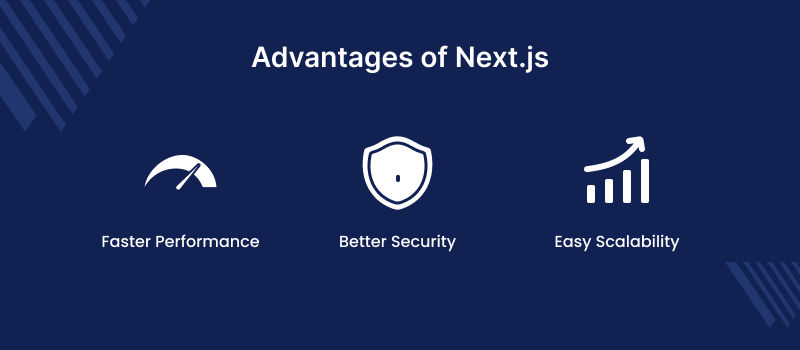
A) Better Security
Next.js reduces the need for server side code, lowering the risk of attacks and keeping your store safer.
B) Easy Scalability
Next.js allows your website to grow easily. It handles more traffic and data without slowing down performance.
C) Faster Performance
With automatic code splitting and optimized loading, Next.js delivers pages quickly to every device.
2) React.js
React is a JavaScript library used to build user interfaces. It is managed by Facebook and a community of developers and companies.
React is popular for its fast speed and component based design. This setup lets developers reuse parts easily and keep the code clean.
When used with a CMS, React becomes more versatile, allowing developers to create reusable blocks instead of writing fixed code for every page.
This makes growing and maintaining your website simple and cost effective. Our demo site, Food Advisor, is built in the same way.
3) Vue.js
Vue is an open source JavaScript framework used to build single page applications and user interfaces. It follows the Model View ViewModel (MVVM) pattern.
It helps you create flexible content layouts that fit your business needs. You can design models, add relations, and build rich digital experiences without relying on a complex CMS.
You can easily write, edit, and manage any type of content. Vue supports both REST and GraphQL APIs, making it simple to fetch and manage data.
Advantages of Vue.js
Below are some of the key advantages that make Vue.js a powerful and developer friendly framework:
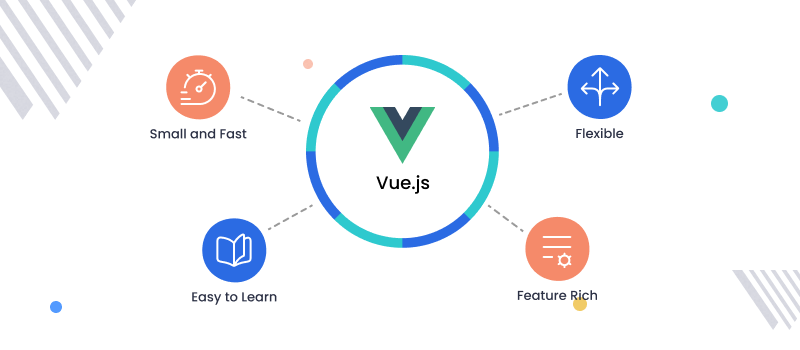
A) Small and Fast
Vue is lightweight, around 18–21KB in size. It loads quickly, which improves site speed and user experience.
B) Easy to Learn
Vue has a clear structure that separates data, life cycle methods, and custom logic. This makes it simple for beginners to understand and maintain.
C) Feature Rich
It includes helpful tools like watchers, computed properties, and directives that make developing modern web apps easy.
D) Flexible
You can write templates in HTML, JavaScript, or pure JS. It also works well with CSS pre processors, templating engines, and TypeScript.
4) Gatsby
Gatsby is a fast and reliable site generator built on React. It helps developers create modern, high performance websites quickly and efficiently.
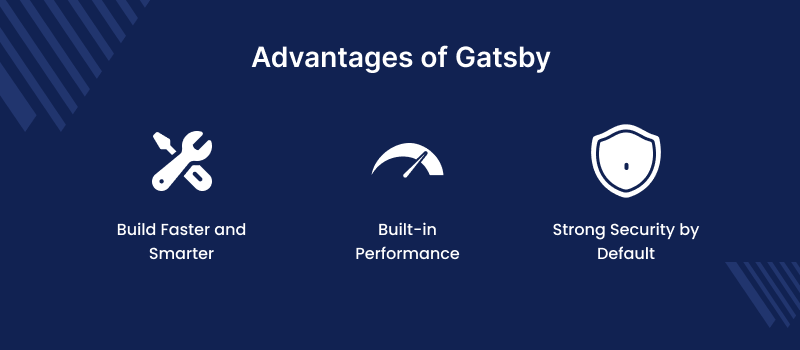
Advantages of Gatsby
Below are some of the key advantages that make Gatsby a powerful framework.
A) Build Faster and Smarter
Gatsby lets you create complete websites quickly and make changes more often. Its simple workflow speeds up development and testing.
B) Built-in Performance
Gatsby automatically optimizes your site for speed, ensuring smooth loading and a great user experience without extra setup.
C) Strong Security by Default
Since Gatsby generates static websites, there are no active servers to attack. This reduces risks from malicious requests, DDOS attempts, or data leaks.
What Challenges Does Headless Commerce Pose?
Headless commerce offers many benefits, but adopting it requires time, investment, and careful planning.
For businesses with large or complex online stores, switching from a traditional system can be hard. Old monolithic systems often limit flexibility and slow down progress.
A clear plan is needed to avoid delays and keep the project on track. Breaking the transition into smaller steps can make it easier to manage.
You can also use pre built integrations or third party tools to save time. This helps businesses adopt headless commerce faster without disrupting ongoing operations.
Is Headless Commerce Not the Ideal Solution for Your Company?
Whether headless commerce is right depends on your business needs. If you only sell to customers using a few devices, a full headless setup may not be necessary.
Small online stores can benefit from a progressive web application. A PWA improves mobile shopping and helps increase orders without fully moving to headless.
For larger businesses, delaying headless adoption might seem tempting due to limited time or budget.
However, as your company grows and competes for a larger market share, moving to headless ensures long term flexibility and a better customer experience. You can start gradually and expand over time.
Now It’s Your Turn
No matter the size of your online store, your main goal should be to get the best performance from both desktop and mobile versions.
Start improving your store’s structure now so you can easily add new features and channels later.
A great first step is adopting a progressive web application (PWA). It helps optimize your store for all devices and improves the shopping experience.
You can then update your backend to communicate through APIs. Over time, this will prepare your system for future growth and give you a lasting competitive edge.
Final Words
In this blog, “What is Headless eCommerce?”, we discussed how this approach separates the frontend and backend for better flexibility and control.
Headless commerce allows brands to update customer experiences faster without rebuilding their entire store. It also helps in integrating new tools and sales channels easily.
This method keeps businesses agile, improves performance, and drives consistent revenue growth.
Headless commerce is shaping the future of online retail, making it a smart move for modern brands.
To learn more about headless eCommerce or to get expert guidance, contact us at https://webkul.uvdesk.com/en/customer/create-ticket/.


2 comments
Thank you very much for your appreciation. For any further queries please email us at [email protected] and we will get back to you accordingly.
Thank You