In this blog, we’ll explore everything you need to know about HR Management Systems (HRMS), including features, benefits, and how they streamline HR processes.
In today’s fast-moving and changing business world, companies are always looking for better ways to manage their work and help employees do their best.
Whether your company is small or large, using a strong Human Resource Management System (HRMS) is beneficial.
It helps you to manage your team, daily tasks, and company rules more effectively.
What does Human Resource Management System mean?
Human Resource Management System is a type of software that helps a companies to handle its main HR (human resources) jobs in one place.

Some of the main tasks it helps with are:
- Keeping track of employee information
- Running payroll
- Hiring and onboarding new employees
- Tracking time and attendance
- Reviewing employee performance
- Managing benefits like health insurance
- Creating reports for rules and laws
By bringing all these HR tasks together in one system, an HRMS gives HR teams quick access to important data. It helps them make smarter decisions and saves time.
Key Features of HR Management System:
A modern HR management system comes with many features to help HR workers, team leaders, and employees.
Below are some of the most important ones:

1. Employee Information Management
An HRMS keeps all employee profile like personal details, job roles, work history, and emergency contacts in one place. This helps keep data correct and makes it easier to create reports.
2. Payroll and Compensation Management
The system does payroll automatically by using data like attendance, taxes, and benefits. This reduces the chance of mistakes and helps making sure employees are paid correctly and provided time.
3. Hiring and Onboarding
An HRMS helps with the whole hiring process, from posting job ads to choosing the right candidates.
It also makes easier to welcome new hires by providing them to fill out forms and get started online.
4. Time and Attendance Management
Employees can check in and out using the web or an mobile app.
Managers can track attendence records, track time off, and also check overtime making payroll easier and more accurate.
5. Performance Management
Human Resource Management System helps in track employee performace, setting goals, and give them feedback.
This helps managers understand how employees are performing and helps employees know what is expected of them.
6. Better Employee Experience
Easy access to information improves the employee experience.
Quick answers to HR questions are helpful, and smooth processes make work life more enjoyable.
An HRMS plays a key role in creating a positive workplace.
7. Compliance and Reporting
An HRMS helps companies follow ERP Risk and Compliance by keeping detailed records and making required reports. This protects the company and ensures everything is done fairly.
8. HR Analytics and Insights
The system gives companies smart reports and AI dashboards. These help leaders understand staff trends and make better decisions using real data.
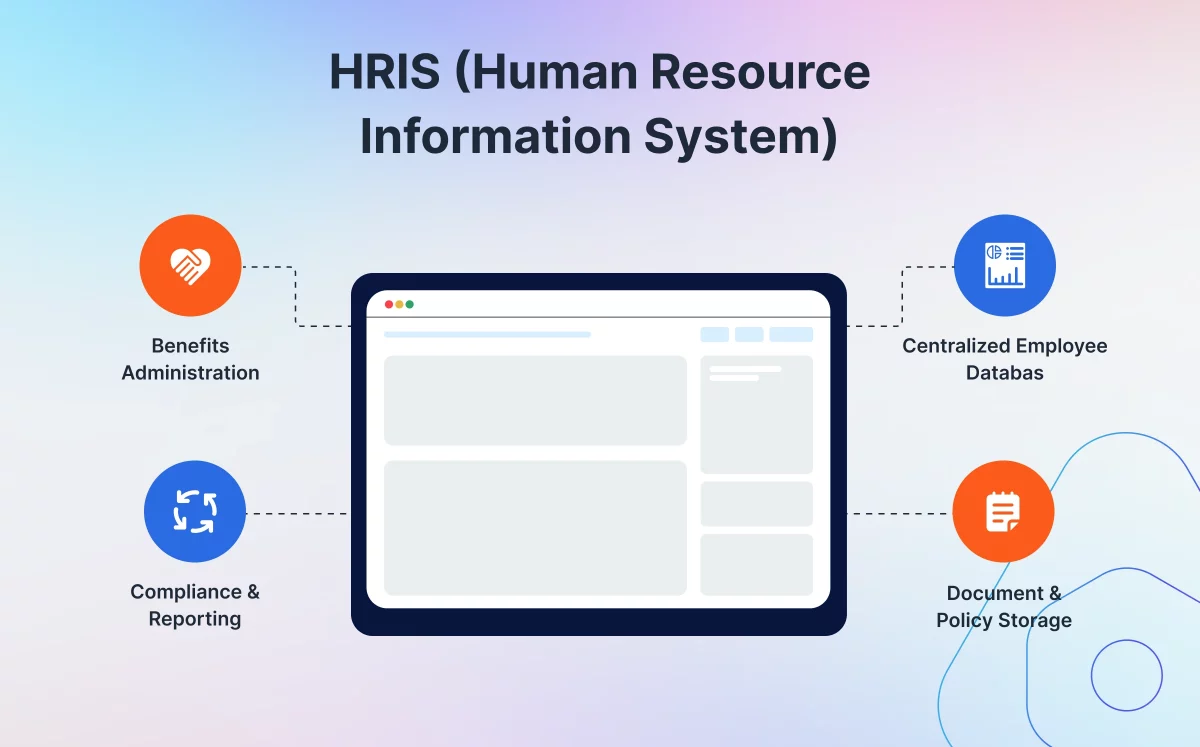
What is an HRIS (Human Resource Information System)?
HRIS stands for Human Resource Information System. Mostly, it handles basic employee information.
For example, an HRIS stores names and addresses.
It also tracks job titles and pay.
Furthermore, it often manages time-off requests. It helps keep core HR data organized.
Therefore, it’s a foundational system.
Understanding HCM (Human Capital Management)
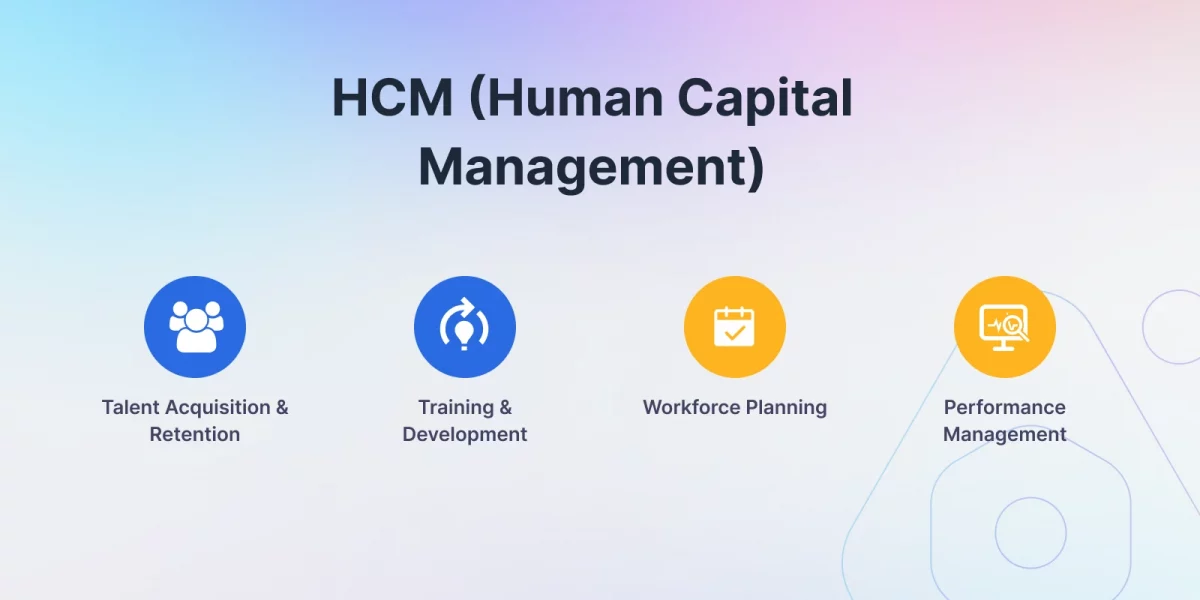
Next, we have HCM, which stands for Human Capital Management. HCM includes all the features of an HRIS, but it also offers additional tools and capabilities.
These extra features focus on managing people talent.
For instance, HCM helps with hiring new people.
It can also track employee performance.
Also, it might help with learning and development. So, HCM is broader than HRIS.
Exploring HRMS ( Human Resource Management System)
This stands for Human Resource Management System. HRMS is often the most complete option. It usually includes all HRIS and HCM features.
However, HRMS can sometimes add even more. This might include things like payroll processing. It could also involve detailed work planning. Therefore, HRMS aims to cover almost all HR tasks.

Benefits of Implementing an HR Management System
An HR management system benefits every department of your business by streamlining processes and improving efficiency. Here’s how:

Increased Efficiency
The system handles boring and repeated tasks automatically, so HR workers can focus on bigger goals and helping employees grow.
Data Accuracy and Accessibility
All data is kept in one system and updated in real time. This lowers the chance of errors and makes sure only the right people can see the information.
Keeping Track of Your Team
A good HR Mangement Systems need a central place for employee information. Think of it like a digital filing cabinet.
Furthermore, it should hold names, addresses, and job details. This makes finding information quick and easy. Consequently, you always have updated records
Enhanced Employee Experience
Employees can manage their own information, ask for time off, and check their payslips without needing to ask HR. This makes work easier and more enjoyable for everyone.
Improved Compliance and Security
The system has built-in tools that help keep your company in line with the law. It also protects employee data with strong security.
Paying People Correctly
Payroll is a very important feature. An HRMS can help pay your team on time. In addition, it calculates wages and taxes accurately. This avoids mistakes with payslips.
Choosing the Right HRMS for Your Business
With many HRMS tools out there, picking the right one can feel hard. Here are a few things to look for:

Ease of use – Is it simple for both HR staff and employees to use?
Scalability – Can it handle your company as it grows?
Integration – Does it work with the tools you already use?
Customization – Can you adjust it to match your company’s needs?
Support – Does the company offer help, training, and updates?
It’s important to pick an HR management system that matches your company’s goals and how your team works.
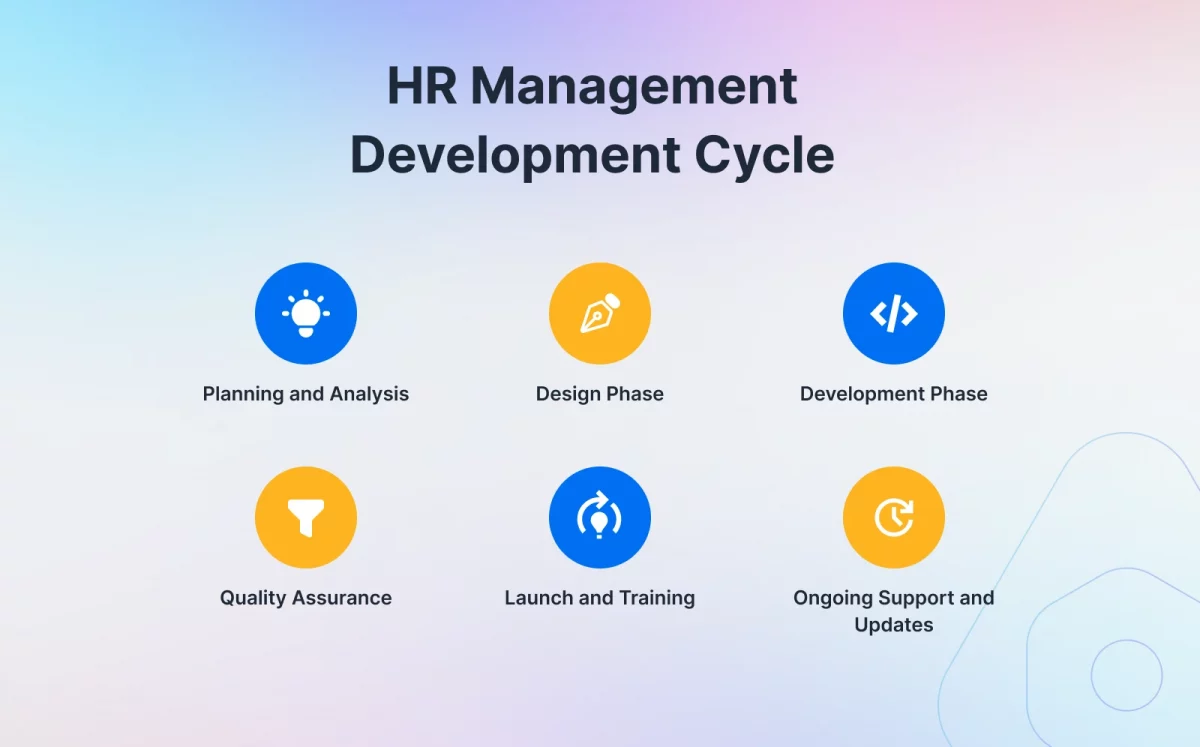
HR Management Development Cycle:
HR Management Development Cycle is designed to be flexible and client-focused. It helps to keep improving the system by listening to feedback and making regular updates.
Also, helps in ERP Development can handle tasks such as employee management, training programs, and customer support.
Step 1: Planning and Analysis
We begin by setting clear goals, project scope, and system requirements. We also collect input from stakeholders to understand their needs for the HRM system.
Step 2: Design Phase
Next, we create a detailed plan for how the system will look and work. This includes designing the database structure and user interface.
Step 3: Development Phase
In this step, we build the HRM system according to the design. We also add different modules to make the system more user-friendly and efficient.
Step 4: Quality Assurance
We test the system several times to make sure it runs smoothly and is easy to use. This helps us catch and fix any issues early on.
Step 5: Launch and Training
Once testing is complete, we launch the HRM system in a live environment. We also provide training to help users understand and use the system with ease.
Step 6: Ongoing Support and Updates
After launch, we continue to support the system by fixing bugs and adding updates. We make improvements based on business needs and user feedback.
Conclusion
An HR Management System (HRMS) is best software for improving HR processes.
It helps save time and make better decisions.
By managing tasks like payroll, performance tracking, and compliance in one place, HRMS makes work easier for teams.
Whether you’re a small or large business, HRMS helps you grow. It also improves data accuracy, security, and employee experience.
If your goal is to follow rules, boost efficiency, or keep your team happy, the right HR management system can help your business grow stronger and more flexible in the long run.
Support
If you still have any issues/queries regarding the same, please raise a ticket at https://webkul.uvdesk.com/en/customer/create-ticket/.
For any doubt, contact us at [email protected].


4 comments
Thank you for the kind words. Glad you found the article simple and practical. Helping growing companies choose the right payroll software to save time and reduce errors was the main goal. Appreciate you taking the time to share your feedback.
Thanks and Regards,
Team Webkul
You’re very welcome! I’m glad you found the article useful. If you have any questions about HRMS in Texas or need more insights, feel free to ask!
Thanks and Regards,
Team Webkul