
Fashion, Japan
Real-time Shopify–Salesforce integration helped Calors reduce manual effort and improve business workflows.


Bared Footwear blends style with podiatry-backed design by creating shoes that feel as good as they look.
And over the years, the brand has built a loyal community across Australia and beyond through its retail stores and online store.
But with growth comes a large amount of data flow in their systems.
The online orders came in through Shopify, and Salesforce CRM is used to manage customer relationships. Both systems were powerful but not communicating with each other.
And that’s when Bared Footwear turned to Webkul.
Bared Footwear wasn’t dealing with custom workflows. Their need was simple: to keep Shopify and Salesforce aligned in real-time.
Let’s take a look at the challenges that they wanted to overcome.
Orders Not Flowing into Salesforce Automatically: They didn’t want their team to create Shopify orders in Salesforce.
Scattered Customer Data: When new customers sign up in Shopify, they want to create those customers’ records in Salesforce as well. Further, if any details changed, like phone number or address, the update had to reflect on both ends.
Order Status Difference: If an order was fulfilled or updated in Shopify, they needed the same status update in Salesforce.
Product and SKU Matching: Products in Shopify need to match correctly with products in Salesforce. The SKU alignment was critical to match the order line.
Inventory Visibility: Same stock levels tracking in both Shopify and Salesforce was needed to guard from overselling or missed sales opportunities.
The team at Bared Footwear didn’t want a temporary solution. They wanted:
Bared Footwear chose Webkul’s Shopify Salesforce Connector for their integration.
They wanted a solution that respects their business logic and provides a single source of truth that they could rely on.
The Webkul team worked with them, understood their workflow, and came up with the following solutions:
Automated Order Sync: The order links to the correct Account and Contact. This gave the support and sales teams immediate visibility into every transaction.
Real-Time Customer Sync: Any update in the contact details of the customers was updated across systems. Now, Salesforce could show an accurate buyer behaviour pattern.
Two-Way Order Status Updates: Relevant updates in both systems were reflected in both directions. This keeps all the marketing, support, and operations teams aligned.
SKU and Product Mapping: Each Shopify SKU maps directly with a corresponding Salesforce Product record.
Inventory Alignment: Stock levels are kept in sync, so Shopify reflects accurate availability based on Salesforce data.
As soon as the integration went live, the brand saw an immediate shift in its data management.
In this way, the team has less manual labor, and they can spend this valuable time focusing on campaign and product growth.
Bared Footwear achieved its alignment goal without any complexity.
The Webkul team had helped them in creating a system where sales data, customer records, and inventory all speak the same language.
If your Shopify store and Salesforce CRM aren’t on the same path, it may be time to close that gap.
Reach out to Webkul at [email protected] or raise a ticket to explore how a real-time Shopify–Salesforce sync can support your growth.

Real-time Shopify–Salesforce integration helped Calors reduce manual effort and improve business workflows.
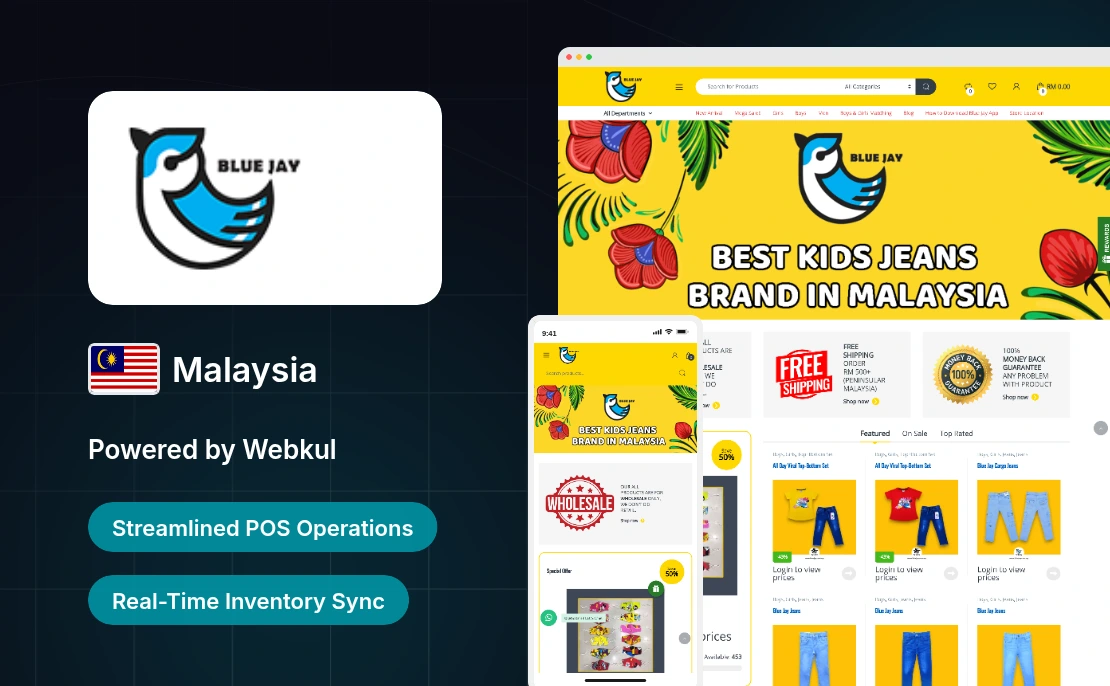
This Malaysia-based B2B kidswear wholesaler uses WooCommerce POS to streamline wholesale in-store and online operations & boost sales.

How Find Pros Ja Selling Fashion And Apparances Products Inside Jamaica Through Marketplace.
Start a Project

Message Sent!
If you have more details or questions, you can reply to the received confirmation email.
Back to Home