What are Qwen and Gemini?
Qwen and Gemini are advanced families of large language models (LLMs) that provide hosted API solutions. Qwen is developed by Alibaba Cloud, and Gemini is developed by Google.
Their models excel in language understanding, coding, and complex reasoning, helping developers build intelligent, AI-driven applications.
In addition, they incorporate advanced image generation capabilities, enabling them to create high-quality, context-aware visuals from text prompts.
This guide walks you through accessing and integrating both APIs into your applications.
Understanding Models and API Keys
Before using either platform, it’s important to understand two core concepts:
- Models: Trained software programs optimized for tasks like chat, coding, reasoning, or multi modal generation.
- API Keys: A unique, secret code used to authenticate and authorize requests.
How to get your Qwen API key?
To access Qwen hosted models from Alibaba Cloud, you need to generate an API key from the Alibaba Cloud console. To generate an API key, follow the following steps.
- Sign up or log in to the Alibaba Cloud console and navigate to Model Studio.
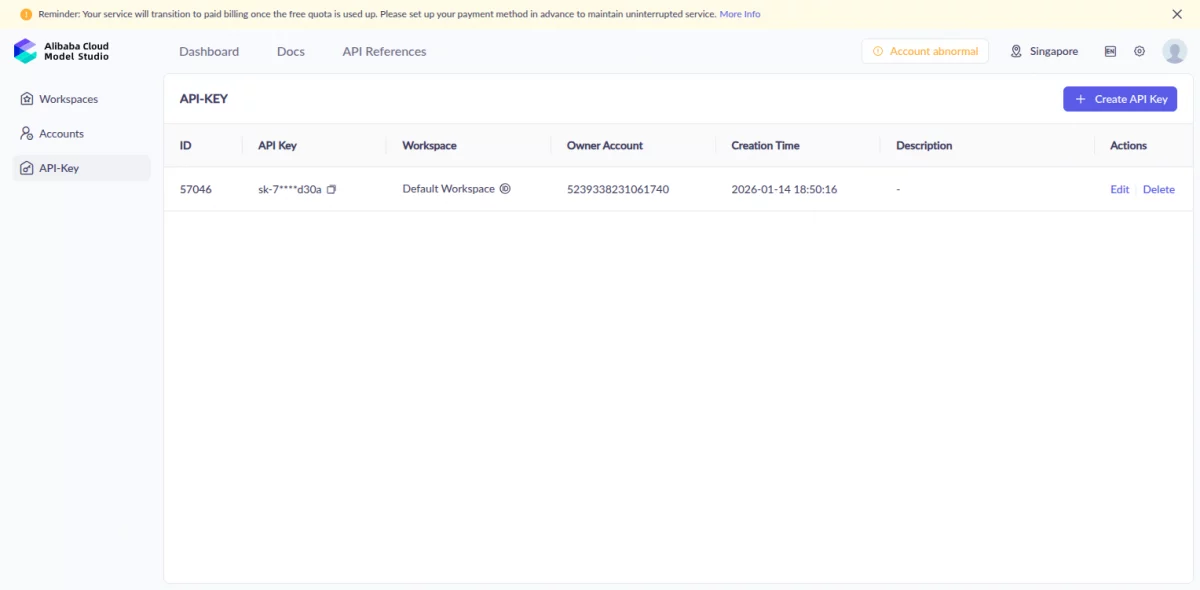
- Once the Alibaba Cloud Model Studio dashboard opens, click on the API KEY on the left sidebar.
- Click on the Create API key button, and a pop-up window appears.
- Select the account and workspace and click on okay.
- Once you create the key, the API key dashboard displays it.
How to get your Gemini API key?
To access Gemini-hosted models from Google Cloud, you need to generate an API key from Google AI Studio. To generate an API key, follow the following steps.
- Visit Google AI Studio and sign up with your account.
- Once you log in to Google AI Studios, click on the ‘Get API key’ option in the bottom left corner.
- When the API key dashboard opens, select the ‘Create API key’ button from the top right corner.
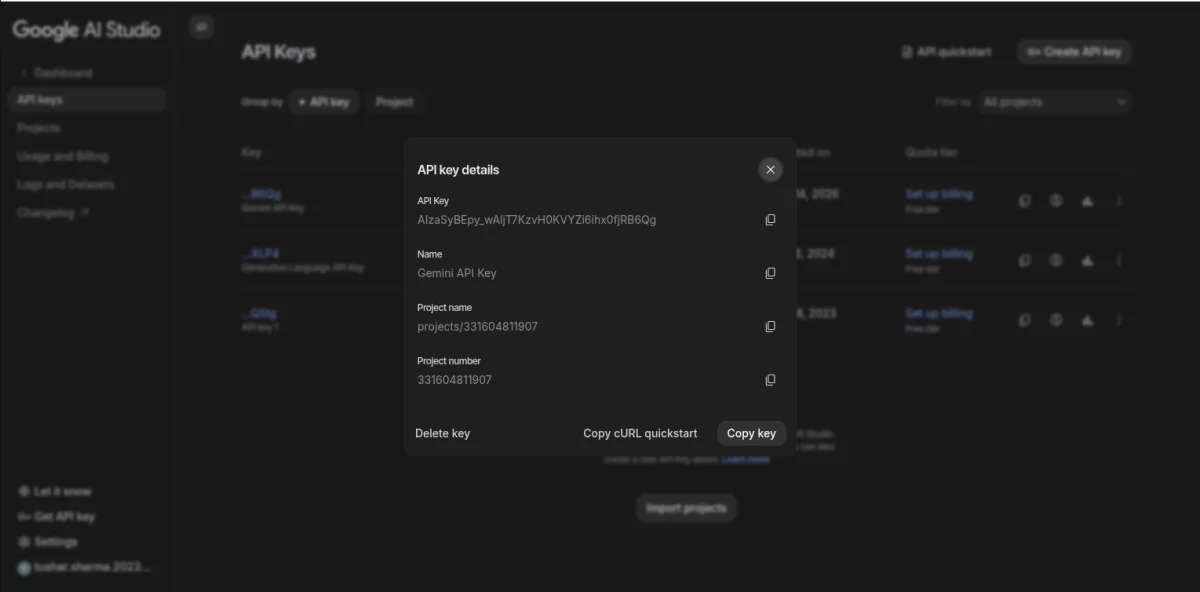
- Provide a name for the key along with the project name and click on the Create Key button.
- Once you create the key, it will show inside the dashboard; click on the key and copy it.
Best Practices for API Integration
- Never disclose your API key: Treat your keys like passwords. Never expose them to unauthorized persons.
- Choose the right model according to your requirement: Select models based on task complexity, response quality, latency, and cost.
- Understand rate limits and pricing: Review quotas, request limits, and pricing tiers to avoid unexpected throttling or costs.
Applications
- AI Chatbots: These keys can be used to integrate LLMs from these providers into our AI-driven chatbots to handle customer queries, order tracking, and returns.
- Virtual Try On: By utilizing the image generation models from these providers, we can power VTON, enabling customers to visualize products such as apparel, eye-wear on their own bodies.
- Semantic Search: By leveraging their embedding model, we can power AI-based semantic search that can lead to better customer engagement.
- Product Recommendation: You can use models from these providers to deliver intelligent product recommendations. Increasing cross-selling opportunities across eCommerce platforms.
Conclusion
Qwen and Gemini APIs offer developers a powerful foundation for building modern, AI-driven applications across domains such as chatbots, image search, virtual try-on etc.
By understanding the available models, securely managing keys, and following best practices around rate limits and pricing, one can ensure reliable, cost-effective integrations.
Choosing the right model for the appropriate task not only improves performance but also optimizes response times and operational costs.
Moreover, as AI ecosystems continue to evolve, staying updated with new model releases, pricing changes, and platform features will help you get the most value from Qwen and Gemini.

Be the first to comment.