Saras Aajeevika: Indian Govt Initiative Adopts Webkul’s Multi-Vendor Model
Project Snapshot
- URL: Esaras.in
- Country: Indian
- Industry Vertical: Handicrafts
- Business Insights: Saras Aajeevika receives around 2,300 monthly visits, showing its growing reach as a trusted platform for handmade products by rural artisans.
- Platform: Magento 2
Merchant Story: Saras Aajeevika
Saras Aajeevika is an Indian government initiative by the Ministry of Rural Development under NRLM, aimed at uplifting rural livelihoods.
It provides an online platform to showcase authentic handcrafted products made by Self Help Groups (SHGs) across the country.
By eliminating middlemen, the platform ensures fair prices and wider reach for artisans, while promoting sustainable, heritage-rich products.


Through its online platform, it bridges rural talent with a national audience, supporting both artisans and India’s handicraft legacy.
Saras Aajeevika decided to transform its online store into a multi-vendor marketplace to empower SHGs and expand the reach of rural artisans across India.
To achieve this, they partnered with a reputable Magento Development Company to implement the Adobe Commerce solution.
Saras Aajeevika Challenges: Lacking a Unified Platform for Sellers & Scale Handicraft Sales
Saras Aajeevika faced difficulties in managing multiple sellers and expanding its reach for handcrafted products through a single online system.
Without a unified platform, onboarding Self Help Groups (SHGs), tracking sales, and maintaining product listings became time-consuming and inefficient.
The lack of integration also made it hard to streamline order management, vendor coordination, and inventory updates across the platform.
This limited the ability to offer artisans fair visibility and customers a seamless shopping experience, affecting overall growth and impact.
This case study explores how Saras Aajeevika addressed these challenges using Webkul’s comprehensive e-commerce solutions.
How Webkul Helped Saras Aajeevika Connect Artisans with Buyers
Marketplace Multi Vendor Module for Magento 2 gave Saras Aajeevika a strong solution to manage many sellers and run its handicraft platform smoothly.
The extension allowed SHGs and rural artisans to use their own vendor dashboard to show their store and product details easily.
With this panel, sellers could sign up, add products, check stock, handle orders and deliveries, and update their profiles without trouble.

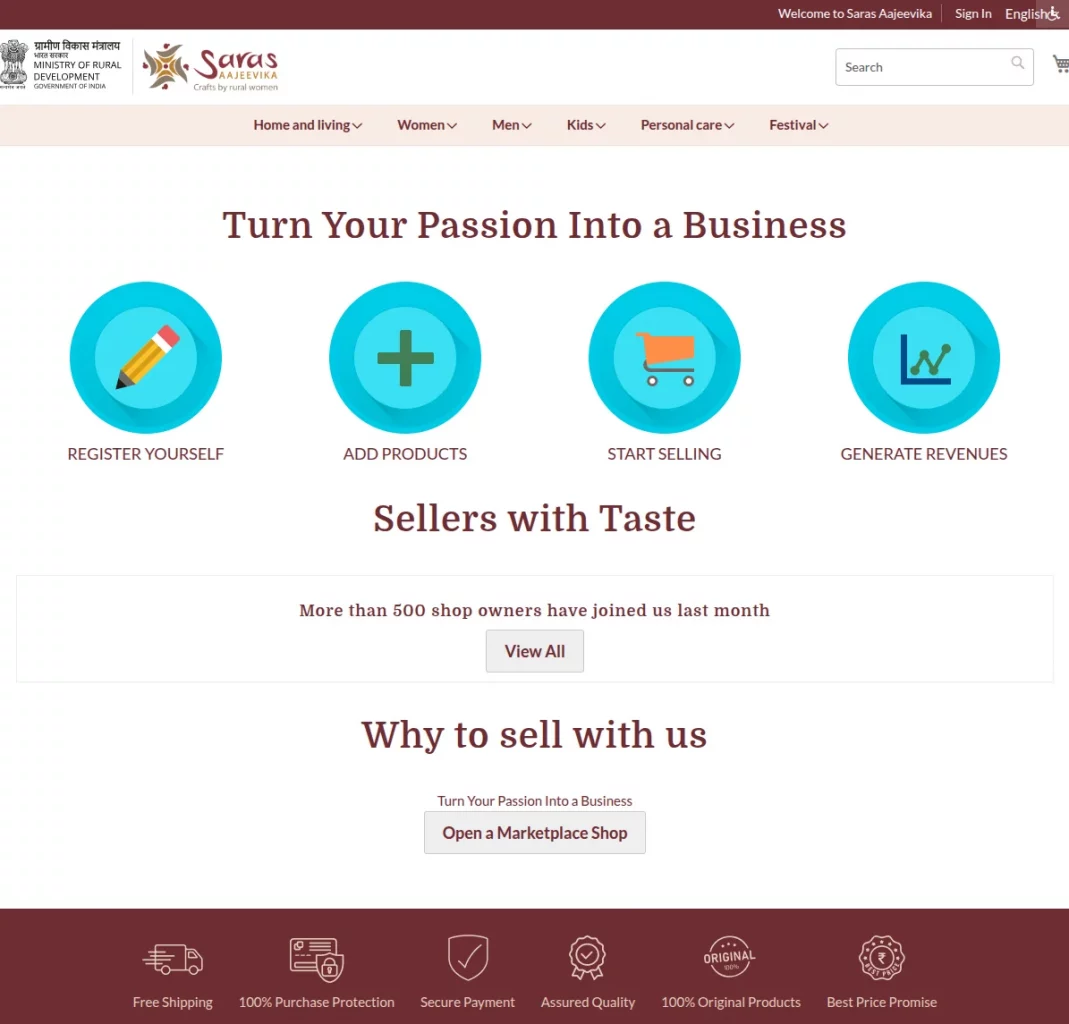
To join as a vendor, users simply visit the marketplace page, click on the ‘Open a Marketplace Shop’ section, and submit their details.
After creating a customer account, they can apply to become a seller by selecting “Become a Seller” and choosing a custom store URL.
Sellers send a request to the Saras Aajeevika admin for review and approval.
Once approved, they can use all features of the marketplace, and customers can easily see and buy their handmade products.
The admin can approve sellers and their products by hand or set it to happen automatically, giving better control.
The easy dashboard helps sellers handle daily tasks and keep their store running well.
Sellers can also edit their profiles, get more attention, and use helpful tools to sell better.
The platform also integrates seamlessly with the Magento 2 Multi Vendor Mobile App, enabling flexible management anytime, anywhere.
Result of Empowering Rural Artisans via Magento 2 Marketplace
Using Magento 2 Marketplace, Saras Aajeevika gave rural artisans a simple way to sell their handmade products online through their own vendor dashboards.
Artisans could easily sign up, add products, manage orders, and connect with buyers across the country—without needing any middlemen.
This helped them earn better income, grow their reach, and showcase their talent to more people.
The platform not only supported local crafts but also helped bring India’s rich handmade heritage into the digital world.
- Made online selling easy and direct for rural artisans.
- Helped sellers earn fair prices with no middlemen.
- Took handmade products to more buyers across India.
- Improved income and confidence of SHG members.
- Gave traditional crafts a strong online presence.