LabGlas Builds an Odoo Product Builder with Webkul
Project Snapshot
- URL: labglas.ch
- Country: Switzerland
- Industry Vertical: Manufacturing
- Platform: Odoo
- Solution Provided: A custom Odoo product builder with option-based pricing and a guided lab system flow.
Merchant Story: LabGlas AG
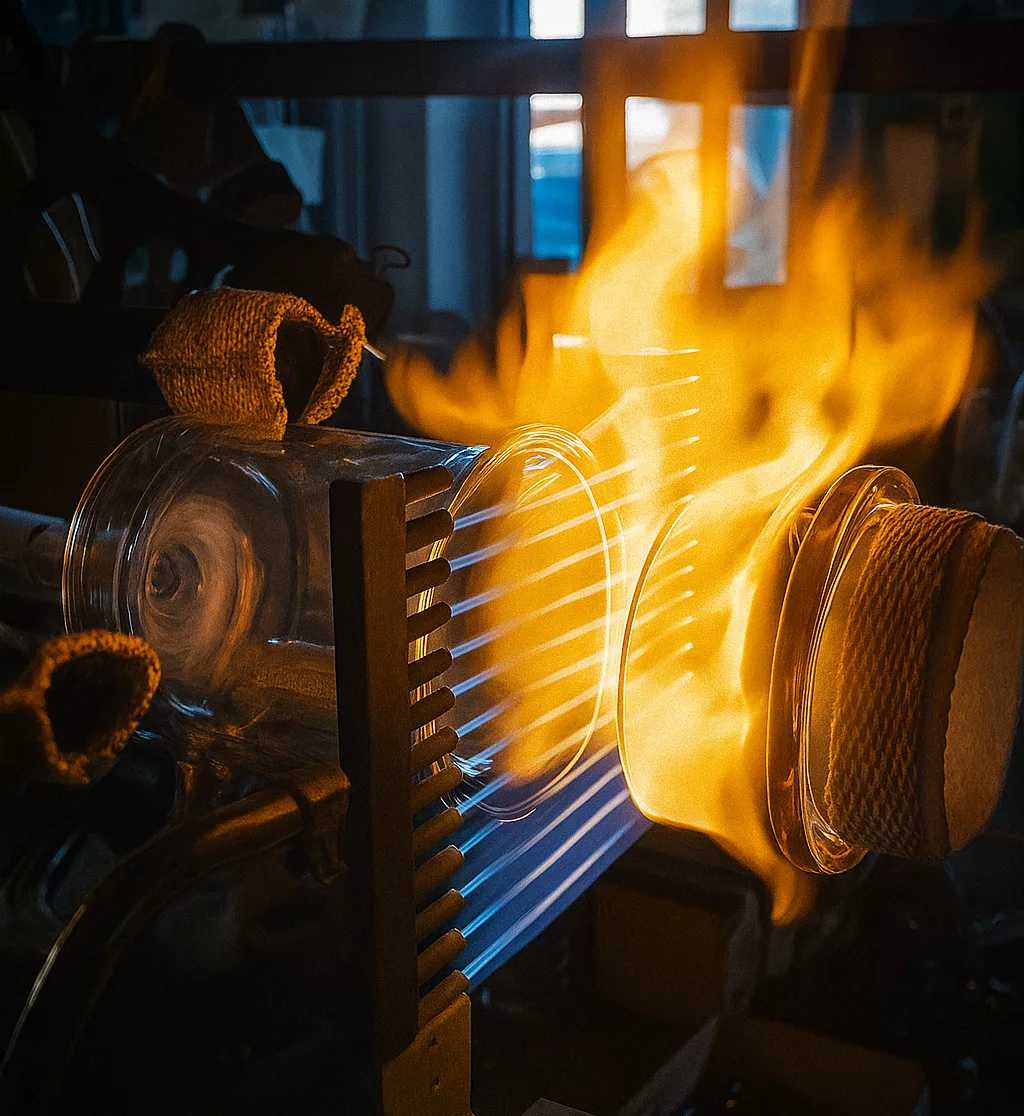
LabGlas AG is a glassworks based in Riehen, near Basel in Switzerland.
Its shop makes lab glassware for drug, chemical, research and plant use.
Among its goods are glass reactors, stills, filter nutsches, heat exchangers and smaller lab items.
LabGlas also makes glassware from buyer drawings and sells parts that work with its own goods.
Glassblowing now works beside an Odoo online shop for direct orders.
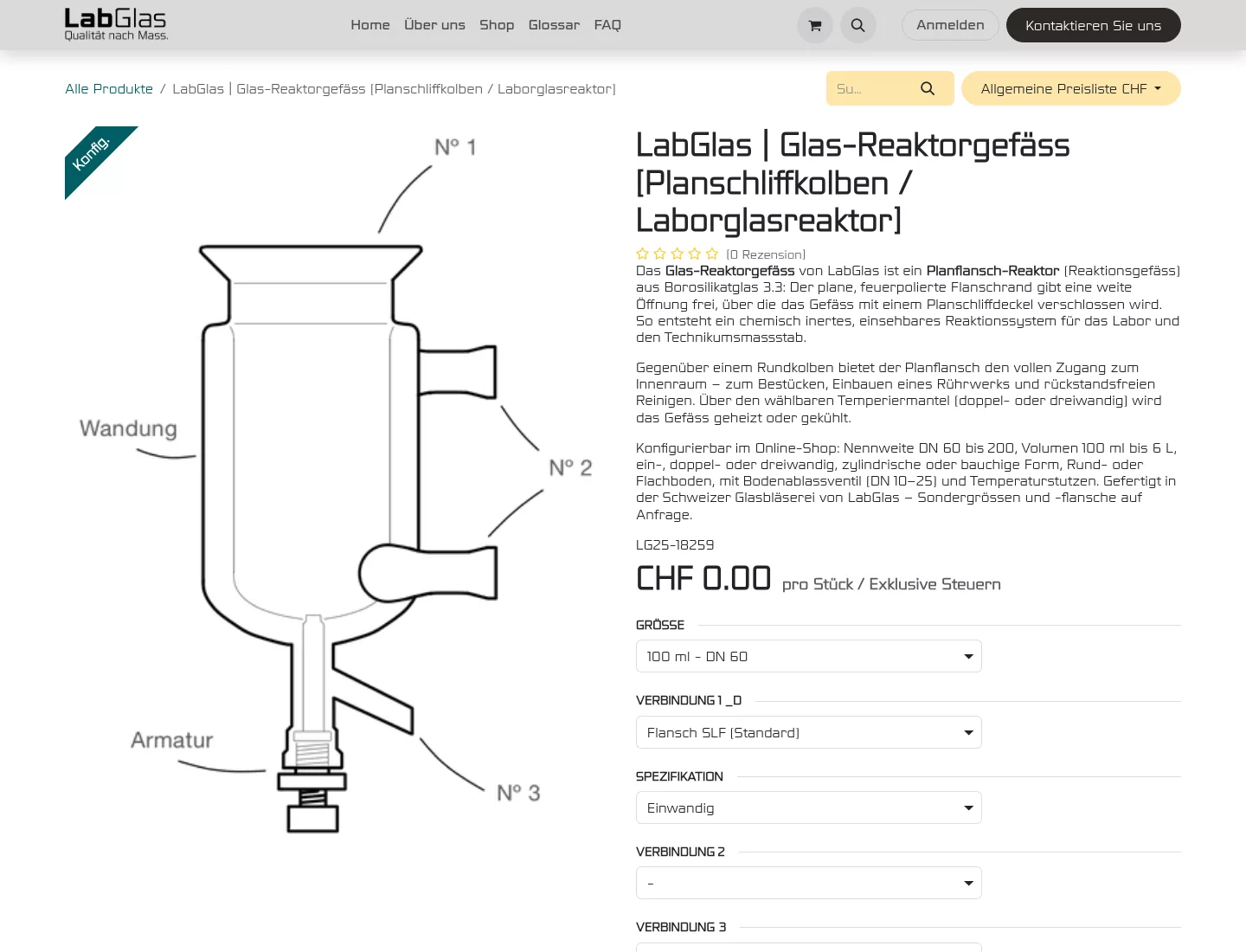
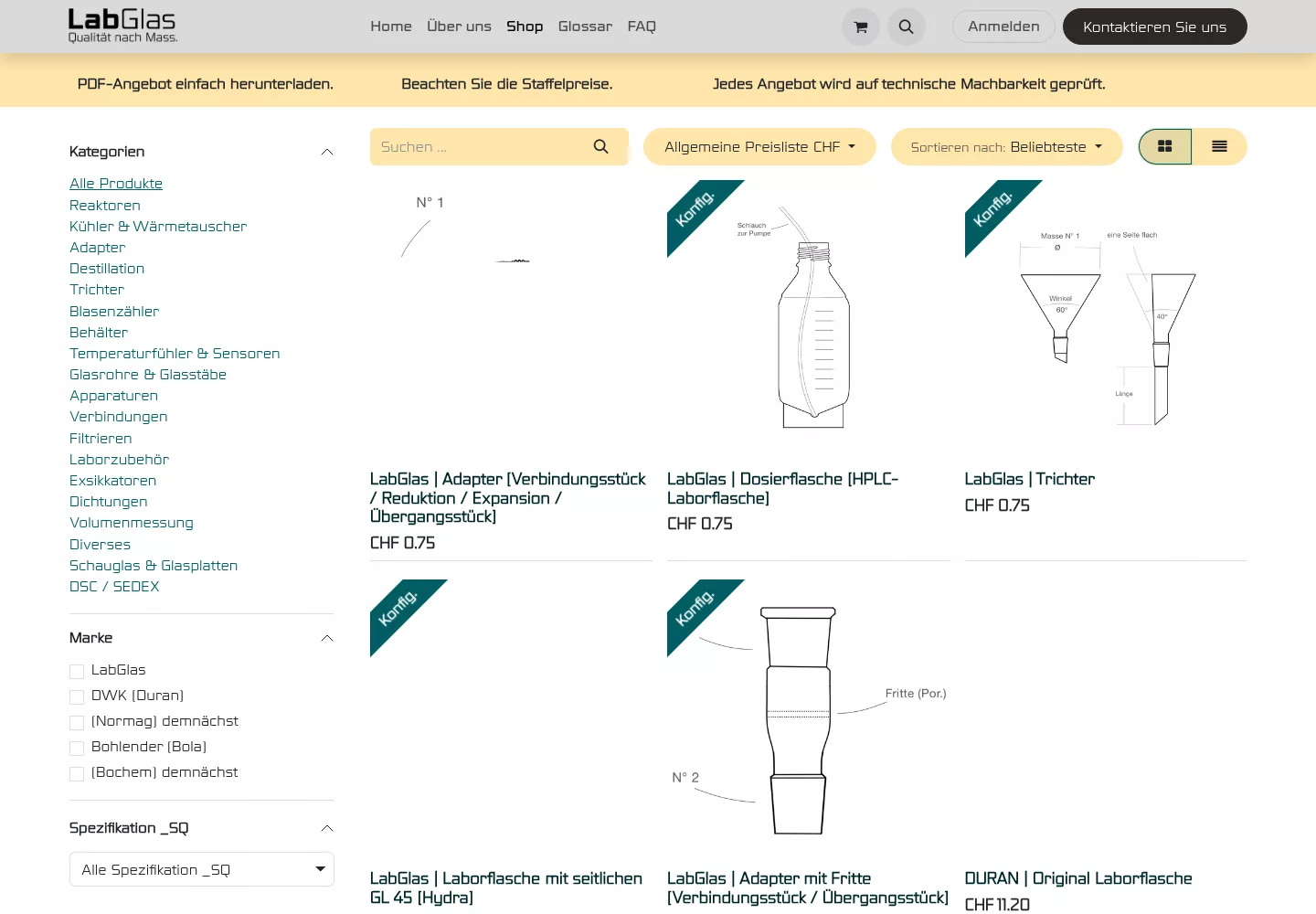
Its public shop includes products with options, so buyers can choose key details before ordering.

Why LabGlas Needed an Odoo Product Builder
LabGlas needed its online prices to follow the same logic used inside its workshop.
Variant pricing could depend on the coating, volume and material chosen together.
Standard variant pricing could not express those linked choices without hand edits across the shop.
Raw material cost and working time also changed the true cost of an option.
Each yearly rate change therefore meant a pricing task for every item in the range.
Complete lab systems brought a second and harder challenge for the sales team.
Building a reactor may need a vessel, lid, stirrer guide, motor, coupling, thermostat and add-ons.
Each part must match the size, work needs and certificates of the other choices.
Staff had to check flange sizes, work out stirrer sizes and confirm that motors and couplings fit.
LabGlas wanted buyers to make those choices online without the same depth of product know-how.
How Webkul Built the Odoo Product Builder
Webkul built two linked tools inside Odoo, without using a ready-made Webkul product.
First, the price tool links variant prices to option combinations, material use and working time.
Next, the guided tool takes a buyer through a complete lab system while checking each part.
Both tools keep Odoo products, prices and sales orders in the same business flow.
Rule-Based Pricing in the Odoo Product Builder
Webkul made price rules that can respond to several product choices at once.
For example, a zinc coating rule may apply only with a defined volume and material.
LabGlas can decide whether every rule must match or whether one match is enough.
Once the buyer selects a valid set, the shop shows its correct selling price.

Cost-Based Pricing When No Fixed Rule Applies
Fixed pricing stands alone when LabGlas has already costed that exact set of choices.
When no rule matches, the engine finds the price from stock and labour costs.
This fallback gives the business agreed prices where needed and calculated prices everywhere else.
Material Consumption and Time-Based Costing
Each product option can hold the raw stock it uses and the amount needed.
Price data comes from the sales price lists in Odoo that LabGlas already keeps.
LabGlas can also record the work needed for an option against a defined hourly rate.
Fifteen minutes spent on a coating can count beside its material cost.
Based on the option, the sum can use time, raw stock or both inputs together.
Manufacturer Cost and Shop-Wide Price Refresh
Webkul added a variant field that shows the amount due to the manufacturer.
Its value comes from labour, material cost and the margin held against that material.
Now, the figure sits beside the selling price instead of being worked out offline.
When hourly or stock rates change, one price refresh updates all items that use them.
A Guided Odoo Product Builder Flow
Instead of showing every part together, the system builder asks one question at a time.
Buyers start with certificate, heat and pressure needs, then move through each part group.
Vessels, lids, stirrers, motors, couplings, thermostats and add-ons can each form a step.
Images and short notes help buyers grasp each choice before they move to the next step.
Optional videos and detail views can offer more context without making every step longer.

Automatic Fit Rules and Design Checks
After each choice, the Odoo product builder removes parts that no longer fit the system.
Choosing a 5-litre vessel therefore shows only lids that match its flange and volume.
When explosion protection is required, buyers see only suitable EX-certified motors and couplings.
Webkul also moved the main engineering calculations into the guided product flow.
Stirrer length comes from vessel height, lid height and the projection of the selected guide.
Stirrer width stays within the vessel width after the required safe gap is applied.
Couplings must suit both the motor and guide, while hoses must fit the selected thermostat.
Controlled Quantities, Optional Steps and Clear Choices
Each group has its own low and high item count set by the LabGlas team.
One system may allow one vessel, up to three stirrers and several accessory units.
Required components are separated from optional choices, and optional steps can be skipped.
These controls stop a system from having too few parts or more than its set limits.
Live Pricing, System Summary and Grouped Cart
Odoo gets the running total from each part and its attribute-based pricing rules.
Any change to a selected part updates the amount shown to the buyer at once.
At the end, Odoo makes a system name, short text and parts list grouped by type.
In the cart, itemised parts stay under that system and form a clear order record.
Cart Edits With Fresh Fit Checks
Customers can reopen a configured system after adding it to the grouped cart.
If a new choice breaks an earlier match, Odoo removes the incompatible part.
Valid replacements then appear with a plain account of what changed and why.
This check stops a later edit from bypassing the same rules used during the first build.
Backend Rules Without Programming
LabGlas defines each system type and its steps from the Odoo backend.
Reactor and filter nutsche systems can therefore follow different groups, orders and item limits.
Staff decide which products belong to each group and whether a step can be skipped.
They can also add rules for certificates, motor pairings, vessel sizes and other product attributes.
For traceability, the backend records each rule used and why it withheld an option.
This rule log helps staff answer questions and change the product logic as the range grows.
Results of the Odoo Product Builder for LabGlas
The Odoo product builder gives LabGlas one set route from product choices to a priced order.
Variant prices now reflect option combinations or their base time and stock costs.
Complete systems follow compatibility rules and design checks before reaching the cart.
Meanwhile, staff can add product rules and system types without asking for new code each time.
The custom Odoo product setup keeps the shop range, guided build and sales inside the same platform.
- Automated pricing across linked product attributes
- Connected selling prices to material use and working time
- Prevented incompatible laboratory system combinations
- Moved engineering checks into the guided buying flow
- Kept grouped configurations editable in the Odoo cart